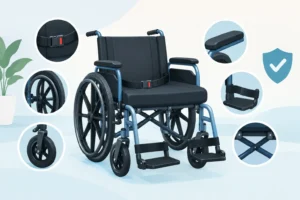


A wheelchair can make it possible to join a family meal, visit the clinic without exhausting a caregiver, or get into the car for a long-awaited outing. That is why choosing a kerusi roda lipat automatik should start with real routines, not just a product photo or a low price.
For many users, automatic folding is not simply a convenient feature. It can reduce the physical effort of handling a mobility device, make storage easier in a condominium or terrace home, and help a caregiver manage transport more safely. But automatic folding also adds motors, controls, and moving parts. The right chair is the one that fits the user, the caregiver, the vehicle, and the places it will be used most often.
What Is a Kerusi Roda Lipat Automatik?
A kerusi roda lipat automatik is generally an electric wheelchair with a powered mechanism that folds and unfolds the frame at the touch of a button or through a simple remote control. Once folded, the chair becomes more compact for car boots, home storage, and travel planning.
This is different from a standard folding electric wheelchair, which may still require the user or caregiver to release a latch and fold the frame manually. It is also different from a lightweight manual wheelchair. Automatic folding solves one specific challenge: reducing the handling effort required before and after a journey.
The feature is especially useful when the user has limited hand strength, arthritis, balance concerns, or fatigue. It can also help caregivers who repeatedly lift, store, and retrieve the chair. Still, the folded chair must usually be lifted or loaded into a vehicle, so folding automation does not automatically mean the chair is light enough for every person to handle alone.
Start With the Daily Journey, Not the Specification Sheet
A chair may look compact online yet feel awkward at the car park, on a ramp, or inside a narrow home corridor. Before comparing models, picture a typical week. Consider where the wheelchair will be stored, who will operate it, how it will enter the car, and whether it needs to navigate lifts, shopping centers, uneven pavements, or outdoor family gatherings.
For a user who mainly moves around the home and visits nearby appointments, compact dimensions and a tight turning radius may matter more than high speed. For someone who travels frequently with family, chair weight, folding size, and battery handling become the priority. A user who spends longer periods in the chair may need more attention to seating support, posture, pressure relief, and recline functions.
It depends on the situation. An ultra-light model can be easier to transport, but a heavier chair may offer a more substantial frame, larger wheels, stronger suspension, or a higher weight capacity. A compact chair can suit tight indoor spaces, while a larger model may provide a more stable ride on rougher outdoor surfaces.
Weight Has Two Meanings
When shoppers ask whether a wheelchair is lightweight, they often mean the total weight of the chair. That number matters, especially for caregivers loading it into a vehicle. However, it is only one part of the decision.
First, check whether the stated weight includes the battery. Some electric wheelchairs use removable batteries, which can make lifting easier because the chair and battery can be handled separately. Second, check the maximum user weight. The chair should provide an appropriate safety margin rather than operating at its limit every day.
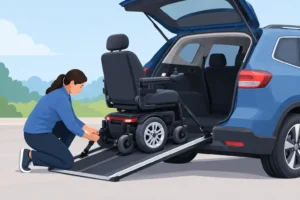
Also look at the folded dimensions. A chair can be light but long or bulky when folded. Measure the boot opening, not only the space inside the boot. Take note of the height of the loading lip as well. A folding chair that technically fits may still be difficult to lift over a high car bumper.
Automatic Folding Should Be Safe and Simple
A reliable automatic folding mechanism should be intuitive enough that both the user and caregiver can operate it with confidence. The controls should be clearly positioned, and the chair should fold on level ground without forcing the frame or trapping loose items.
During a demonstration, ask to fold and unfold the chair several times. Watch the movement of the footrest, armrests, joystick, and cables. Confirm what happens if the battery is low and whether there is a manual backup procedure. Ask where fingers should be kept during folding, particularly if children or multiple family members will be around the chair.
A practical detail is whether the chair can remain upright when folded. This affects storage in narrow spaces and whether one person can guide it through a doorway or toward a car. Wheels designed for rolling the folded chair can also make a meaningful difference, even when the chair still needs to be lifted for loading.
Comfort Is a Safety Feature, Not an Extra
A wheelchair that is uncomfortable is less likely to be used confidently. More importantly, poor support can contribute to sliding, fatigue, poor posture, and pressure discomfort during longer outings. Seat width, seat depth, backrest height, armrest position, and footrest adjustment should suit the individual user.
Pay close attention to the user’s hips, thighs, feet, and head position. Feet should rest securely rather than dangle, and the user should not feel squeezed at the hips or forced to lean to one side. A supportive cushion may be appropriate for users who sit for extended periods, but it should not make the seat height impractical for dining tables, transfers, or vehicle access.
Reclining functions can improve comfort for some people, especially during longer periods of sitting. Yet recline adds weight, complexity, and sometimes a larger overall footprint. It is worth choosing when it addresses a genuine care need, not merely because it sounds premium.
Battery Range Is About Real Conditions
Manufacturer range figures are helpful, but they are not a promise that every user will travel the same distance. Range changes with body weight, terrain, tire condition, speed, slopes, frequent stopping, and battery age. Outdoor heat and long climbs can also affect performance.
Instead of choosing based on the largest kilometer figure, estimate the actual daily requirement. A chair used around the home, mall, clinic, and nearby neighborhood may not need extreme range. A user who spends full days outdoors or takes longer trips may benefit from a larger battery, provided it does not make transport too difficult.
Ask how long charging takes, whether the battery can be removed, and how replacement batteries are supplied. Follow the charging instructions carefully. A battery should be charged with its approved charger and stored according to the manufacturer’s guidance, particularly if the chair will not be used for several weeks.
Indoor and Outdoor Use Need Different Priorities
Smooth indoor flooring, narrow doorways, and elevator access call for maneuverability. Look at the chair’s overall width and turning behavior with the footrests in place. Test whether it can approach a dining table, bathroom entrance, or bedroom comfortably.
Outdoor use introduces different demands. Small front wheels can struggle with cracks, loose gravel, grass, and uneven pavements. Larger wheels, better ground clearance, suspension, and a stable frame may create a more secure experience, though these features can increase the chair’s size and weight.
No electric wheelchair should be treated as an all-terrain vehicle unless it is specifically designed for off-road use. Steep ramps, wet tiles, drain covers, and road edges require caution regardless of the chair’s power. A safe speed setting and proper practice are often more valuable than a high top speed.
Service Support Matters After Delivery
An automatic folding chair is a piece of mobility technology, not a disposable appliance. Motors, controllers, batteries, tires, and folding components may eventually require inspection, adjustment, or replacement. The availability of local technicians and spare parts can be just as important as the original purchase price.
Before buying, ask about warranty coverage, service procedures, battery replacement, and the expected availability of parts. Vechair Technology supports its mobility range through sales, service, and spare parts, with warranty coverage that includes two years for motors and one year for batteries, chargers, and controllers. For first-time buyers, a guided test drive is valuable because it reveals fit, comfort, and handling issues that specifications alone cannot show.
Questions Worth Asking During a Test Drive
A short demonstration should feel like a real-use check, not a quick ride across a showroom floor. Test the turning response, braking feel, joystick sensitivity, seating position, and visibility around the chair. If possible, practice approaching a ramp and maneuvering through a tighter space.
Ask the staff to demonstrate folding, unfolding, charging, and safe transfers. If a family member will regularly help, bring that person along. They should try moving the folded chair, lifting it only if appropriate, and understanding the controls. The best choice supports both the person sitting in the chair and the person assisting them.
A kerusi roda lipat automatik should make daily movement feel more possible, not create another difficult routine. Take the time to test it honestly, measure the spaces that matter, and choose the model that gives the user greater confidence to say yes to the next outing.