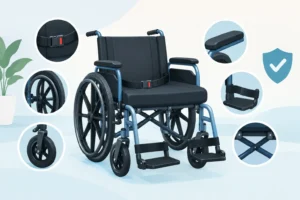


A chair that is only a few pounds lighter can change the entire day. It may be easier to lift into a car, turn through a narrow hallway, or push across a clinic parking lot without exhausting the caregiver. A kerusi roda manual ringan, commonly understood as a lightweight manual wheelchair, is not simply a smaller version of a standard chair. It is a mobility tool that should fit the user, the caregiver, the vehicle, and the places where life happens.
For a person recovering from surgery, living with reduced strength, or managing a long-term mobility condition, the right manual chair can protect energy and restore confidence. The best choice is rarely based on chair weight alone. Comfort, safety, posture, wheel design, and daily routine matter just as much.
What Makes a Manual Wheelchair Truly Lightweight?
A lightweight manual wheelchair is generally designed with transport and easier handling in mind. Many use aluminum frames, while premium designs may use materials such as magnesium or carbon fiber to reduce overall weight. But a low number on a specification sheet is useful only when you know what that number includes.
Ask whether the listed weight includes the footrests, armrests, rear wheels, cushion, and anti-tip wheels. Some chairs have quick-release rear wheels or detachable parts, so the heaviest piece a caregiver lifts into a car may be considerably lighter than the complete assembled chair. That difference matters when loading the chair several times a week.
There is also a practical trade-off. An ultra-light chair may be easier to carry, but it can have a narrower seat, smaller wheels, or fewer comfort features. A chair with a slightly heavier frame may provide a more supportive seating position and feel more stable outdoors. The goal is not to buy the lightest possible chair. It is to choose the lightest chair that still supports the user safely and comfortably.
Start With the User, Not the Product Label
The first question is simple: who will use the chair, and how will they use it? A temporary user who needs support after an injury may prioritize a compact folding frame and simple storage. A daily user may need more precise seat sizing, pressure relief, adjustable footrests, and wheels suited to independent propulsion.
Seat width is especially important. A seat that is too narrow can create pressure and discomfort. One that is too wide can reduce posture support and make it harder to reach the wheels efficiently. Seat depth, backrest height, armrest position, and footrest length should also suit the user’s body and mobility level.
Weight capacity deserves the same attention. Never assume a lightweight frame is suitable for every body type. Check the manufacturer’s stated payload, then allow for clothing, bags, cushions, and any items regularly carried on the chair. A chair should never be selected at the edge of its rated capacity.
If the user has limited trunk control, pain, circulation concerns, or a high risk of pressure sores, basic seating may not be enough. A supportive cushion and appropriate backrest can be more valuable than shaving off a few extra pounds. When needs are complex, a hands-on assessment is the safer path.
Self-Propelled or Caregiver-Propelled?
This choice affects the wheel size and how the chair behaves in daily use. Self-propelled wheelchairs typically have larger rear wheels with hand rims. They give the user greater independence on smooth surfaces and can make curbs or uneven ground more manageable with proper technique.
Transport-style wheelchairs use smaller rear wheels and are intended to be pushed by a caregiver. They are often compact and convenient for car travel, hospital visits, shopping trips, or short outings. However, they do not offer the same level of independent movement.
A caregiver-propelled chair can be an excellent choice when it matches the user’s needs. It should not be chosen merely because it folds smaller. If a user expects to move around independently at home, larger wheels may provide more freedom every day.
Choose the Right Folding and Transport Setup
For families who drive frequently, a folding mechanism often becomes part of the buying decision. Traditional cross-brace folding wheelchairs collapse from the sides and can be practical for trunks and storage rooms. Rigid-frame lightweight chairs may be more efficient to propel, but they usually require a larger vehicle or removable wheels.
Before buying, measure the trunk opening, available cargo depth, doorway widths, elevator access, and the narrowest route inside the home. A chair that looks compact in a showroom may still be awkward in a small sedan or apartment entrance.
Consider the person doing the lifting, too. Repeatedly twisting, bending, and lifting a wheelchair can strain a caregiver’s back and shoulders. Detachable footrests, fold-down backrests, and quick-release wheels can make loading more manageable. The best setup is one that can be used safely on an ordinary tired day, not only when everyone feels strong.
Wheels, Brakes, and Terrain Matter More Than Expected
Indoor tile, smooth sidewalks, rough pavement, grass, gravel, ramps, and wet surfaces place very different demands on a manual chair. Small solid front casters are easy to maintain and work well indoors, but they can catch on cracks and uneven pavement. Larger wheels generally roll more smoothly over imperfect surfaces, though they add size and sometimes weight.
Solid tires eliminate the worry of flats and are a practical choice for many users. Pneumatic tires can provide a softer ride and better grip outdoors, but they require inflation and occasional maintenance. Neither is automatically better. The right option depends on where the chair spends most of its time.
Test the brakes with the user seated in the chair. They should be easy to reach, secure on a slope, and clear of the user’s hands while propelling. If transfers are part of the daily routine, consider whether the armrests lift away or detach and whether the footrests swing aside. These small details can make transfers safer for both the user and caregiver.
Comfort Is a Daily Safety Feature
A lightweight chair should not leave the user feeling unstable, cramped, or unsupported. Long periods in an ill-fitting seat can contribute to fatigue, poor posture, shoulder strain, and skin discomfort. A suitable cushion helps distribute pressure and can improve sitting tolerance, particularly for users who spend several hours in the chair.
Pay attention to the backrest angle and the user’s ability to sit upright without sliding forward. Check that the feet rest fully on the footplates rather than dangling. The knees should not be forced too high or too low. If the chair has a seat belt, use it as intended for positioning, not as a substitute for correct seating or supervision.
A short test drive can reveal more than a product description. Try turning, braking, passing through a doorway, reaching a table, and rolling over the type of surface the user encounters most often. If possible, test the chair with the user’s usual cushion, bag, and footwear.
When a Lightweight Manual Chair Is Not Enough
A manual wheelchair is not the right answer for every mobility need. If a user cannot propel safely, tires quickly, has significant shoulder pain, or must regularly travel long distances outdoors, a power wheelchair or mobility scooter may offer greater independence. For users requiring frequent repositioning or assistance with transfers, a reclining or specialized care chair may also be more appropriate.
That does not mean a manual chair has no role. Many households benefit from having a lightweight manual chair for travel, appointments, or backup transportation even when the primary device is powered. The key is to be honest about daily distance, terrain, strength, and caregiving support.
Buy With Service and Long-Term Use in Mind
A wheelchair is a daily-use device, so replacement parts and after-sales service deserve attention before purchase. Tires, brakes, footrests, arm pads, cushions, and wheel components can wear over time. Local support makes a real difference when an adjustment or repair is needed quickly.
At Vechair, customers can compare mobility options in person and test drive suitable models with trained guidance. A hands-on consultation is particularly valuable for first-time buyers, caregivers unsure about lifting weight, and users comparing a compact manual chair with an electric alternative.
The right chair should make movement feel less like a daily obstacle and more like a familiar part of life. Take the time to sit in it, fold it, lift it, and use it in the ways that matter most. A well-chosen lightweight manual wheelchair supports more than transport – it supports the confidence to keep going where you want to go.