

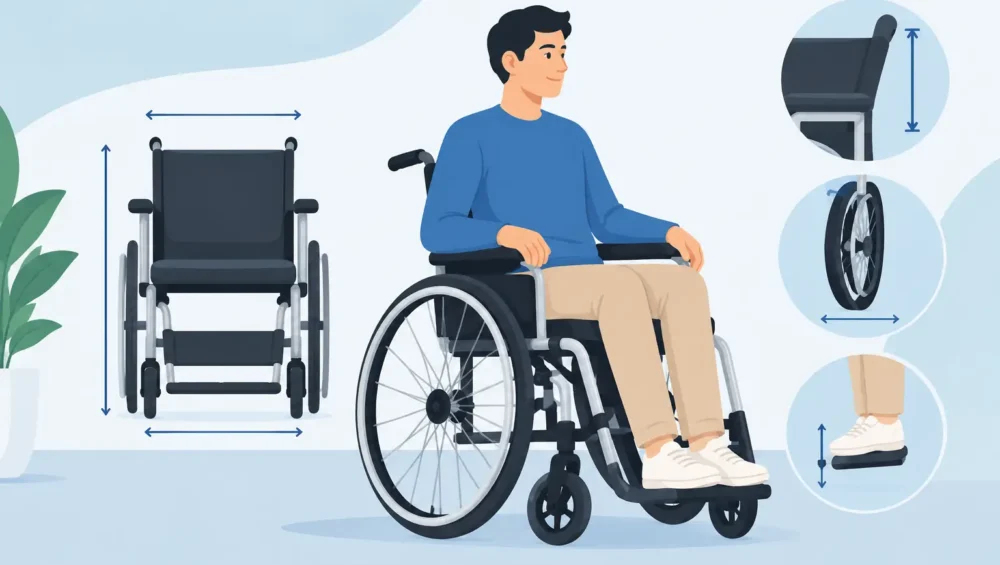
A wheelchair can have an excellent motor, a lightweight frame, and an attractive modern design, yet still feel difficult to use if the fit is wrong. This panduan saiz kerusi roda helps users, families, and caregivers choose dimensions that support comfort, safer posture, easier transfers, and greater confidence during everyday movement.
Wheelchair sizing is not simply about selecting small, medium, or large. The best size depends on the user’s body measurements, mobility level, daily routine, home layout, vehicle transport needs, and whether the chair will be used mostly indoors, outdoors, or both. A chair that is too narrow can create pressure and discomfort. One that is too wide may make self-propelling, reaching the armrests, and passing through doorways more difficult.
Why wheelchair size affects daily independence
A well-sized wheelchair gives the user stable support without making them feel restricted. It helps keep the pelvis positioned correctly, allows the feet to rest securely, and reduces the effort needed to move, turn, or transfer from the chair to a bed, sofa, toilet, or car seat.
For a caregiver, correct sizing also matters. A wheelchair that is too large may be harder to maneuver through a hallway or lift into a vehicle. A chair that is too small can cause the user to slide forward, lean to one side, or experience discomfort after only a short period of sitting.
This is especially relevant when choosing an electric wheelchair. Battery range, motor power, folding mechanism, and chair weight are all valuable features, but the seating dimensions still need to suit the person using it. Comfort is not an extra feature. It is the foundation of consistent, confident mobility.
Panduan saiz kerusi roda: the measurements to check
Before comparing models, measure the user while they are seated in their usual posture. Wear the clothing and shoes normally used for outings, particularly if the wheelchair will be used outside. A soft measuring tape is usually the easiest tool.
Seat width
Measure across the widest part of the hips or thighs while seated. Add approximately 1 to 2 inches for comfortable movement and clothing clearance.
For example, if the user measures 17 inches across the hips, a seat width around 18 to 19 inches may be suitable. The user should not feel squeezed at the hips, but there should not be a large gap on either side. Too much extra width can make it harder to maintain a centered posture and may prevent the arms from resting naturally on the armrests.
Users with changing body weight, heavier winter clothing, or medical equipment may need additional room. For larger users, do not look at seat width alone. Confirm the overall chair width and the maximum supported user weight as well.
Seat depth
Seat depth is measured from the back of the buttocks to the back of the knee. Choose a seat that ends about 1 to 2 inches before the back of the knee.
A seat that is too deep can press against the back of the knees and encourage slouching. A seat that is too shallow may not support enough of the thighs, which can make long periods of sitting feel tiring. Proper thigh support helps distribute pressure more evenly, especially for users who spend many hours in their wheelchair.
Reclining and tilt-capable chairs can offer additional positioning options, but they do not replace a correctly sized seat. The starting position should still be stable and comfortable.
Seat height
Seat height is the distance from the floor to the top of the cushion. This measurement affects transfers, foot support, dining-table access, and the ability to move close to a desk or countertop.
For users who self-propel a manual wheelchair with their feet, a lower seat may be more practical. For users transferring to a bed, car, or toilet, the ideal height often depends on the height of those surfaces. A seat that is much lower or higher than the transfer surface can make the movement more challenging.
In an electric wheelchair, seat height also influences how easily the user can reach light switches, tables, and elevator controls. Check the chair specifications with the cushion included, because a thicker pressure-relief cushion can noticeably change the final sitting height.
Backrest height and support
Backrest height should match the user’s trunk strength and support needs. Someone with strong core control may prefer a lower backrest for arm movement and a lighter feel. A user with limited trunk stability may benefit from a taller backrest, head support, lateral supports, or a reclining system.
The right choice depends on the person, not just their diagnosis. A user who can sit upright at home may still need more support for longer outdoor trips or uneven terrain. If the wheelchair is being selected for an elderly parent or someone recovering from illness, comfort over several hours should be assessed, not only during a quick seated test.
Armrest, footrest, and leg position
Armrests should allow the shoulders to stay relaxed rather than raised. The user’s elbows should rest comfortably, with the forearms supported when needed. Removable or flip-up armrests can be useful for side transfers, but they should remain secure during use.
Footrests need to support the feet fully without causing the thighs to lift off the cushion. If the footrests are too high, pressure may build under the thighs. If they are too low, the feet may drag or the legs may feel unsupported. The knees should generally be positioned at a comfortable angle, with adequate clearance from walls, curbs, and uneven surfaces.
Do not forget the wheelchair’s outside dimensions
The seat may fit perfectly, but the wheelchair also needs to fit the user’s environment. Measure the narrowest doorways, bathroom entrance, hallway turns, elevator space, and the area beside the bed. If the chair will travel in a car, measure the trunk opening or cargo area before choosing a folding model.
This is where trade-offs often appear. A wider, heavy-duty wheelchair may provide greater comfort and higher weight capacity, but it can be less convenient in tight indoor spaces. A compact folding chair may be easier to transport, but users should make sure its seat dimensions, suspension, and range meet their daily needs.
For outdoor use, consider more than size. Larger wheels, stronger motors, ground clearance, and stable construction can make a meaningful difference on ramps, parking areas, tiled walkways, and uneven pavement. A chair for shopping centers and smooth indoor floors may not be the best choice for rougher terrain.
Match the chair size to the user’s lifestyle
A lightweight travel wheelchair can be ideal for someone who frequently rides in a car, visits family, or needs a chair that can be folded and lifted more easily. However, a very lightweight chair is not automatically the best option for every user. Someone who needs extra postural support, a reclining backrest, or a higher weight capacity may be better served by a more substantial model.
For bariatric users, look for a chair designed specifically for higher payloads rather than simply choosing the widest available seat. Frame strength, wheel construction, motor performance, battery capability, and turning stability all need to work together. Some heavy-duty models support up to 200 kg, but the appropriate option should still be selected based on body measurements and intended use.
If the chair is for a person with limited hand strength, automatic folding, powered recline, joystick placement, and transfer-friendly armrests may matter as much as the actual seat dimensions. For caregivers, features such as attendant controls, braking, removable cushions, and manageable transport weight can reduce daily strain.
Test the fit before making a final decision
Specifications provide a useful starting point, but a test drive reveals details that a measurement chart cannot. Sit in the chair for more than a few minutes. Check whether the hips remain centered, the back is supported, the feet rest naturally, and the user can reach the joystick or wheels without stretching.
Try turning through a tight space, approaching a table, moving over a small threshold, and transferring in and out if possible. Ask whether the chair will still feel practical after an hour, not only whether it feels comfortable at first.
At Vechair, users can test drive different wheelchair configurations with guidance from trained staff. This is particularly helpful when comparing compact folding chairs, lightweight carbon or magnesium options, recline models, and heavy-duty designs. A professional fitting conversation can also account for cushions, posture needs, home access, and future changes in mobility.
A wheelchair should help a person take part in daily life with less hesitation, whether that means moving around the home, joining a family outing, or traveling independently. Bring the user’s measurements, think honestly about where the chair will go each day, and allow enough time to test the fit. The right size is the one that supports both the body and the life the user wants to keep living.