
A transfer from bed to wheelchair can take less than a minute, yet it is one of the moments most likely to leave a caregiver with back pain or a loved one feeling insecure. The right equipment changes that experience. This patient transfer hoist guide explains how to select and use a hoist based on the person, the room, and the transfers that happen every day.
A hoist is not simply a piece of medical equipment. It can make morning routines, bathing, toileting, and getting into a mobility chair feel more predictable and dignified. The best choice protects the caregiver as much as the person being moved, while keeping comfort, confidence, and independence at the center of care.
Start With the Transfer, Not the Hoist
Before comparing specifications, look closely at the actual transfer routine. Is the person moving from a hospital bed to a wheelchair? From a recliner to a commode? Into a bathroom where doorways and turning space are limited? A lift that works well beside a bed may be too wide to position around a low sofa or through a narrow bathroom door.
Consider the person’s ability to participate. Someone with good upper-body strength who can bear weight through their legs may benefit from a standing transfer aid. Someone who cannot safely stand, has limited trunk control, or needs full support generally needs a full-body patient hoist and an appropriate sling.
Weight capacity matters, but it should never be the only number checked. The rated capacity must comfortably exceed the user’s body weight, including clothing, blankets, or any support equipment used during the transfer. A bariatric hoist also needs a wider base and a sling designed for the user, not simply a higher weight rating.
The caregiver’s needs are equally relevant. If one family member will handle most transfers, choose controls, wheels, and a sling system they can manage confidently. A complex setup may look impressive on paper but become frustrating during a busy morning or when help is needed quickly.
Patient Transfer Hoist Guide: Choose the Right Type
Most home-care hoists fall into three practical categories. Each has a different role, and choosing the wrong type can make an otherwise good transfer routine harder.
Mobile full-body hoists
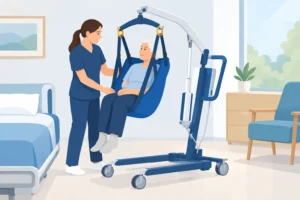
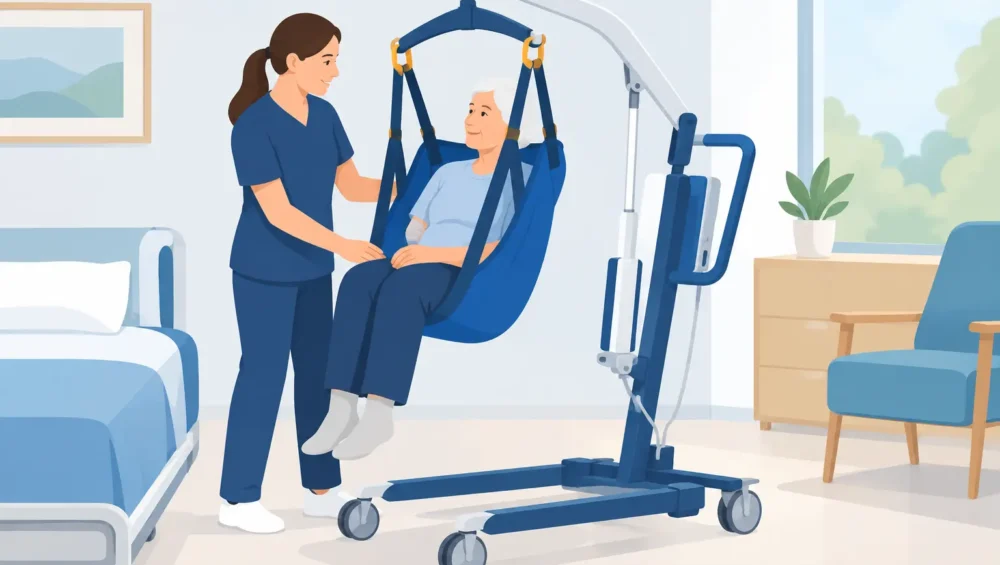
A mobile full-body hoist has a wheeled base, lifting mast, and boom that supports a sling. It is a flexible choice for transfers between bed, wheelchair, recliner, commode, and other seated surfaces. Because it moves with the user, it can suit homes where care takes place in more than one room.
Look at the base-leg width, overall turning radius, and boom height. The legs need to fit around or beneath the furniture being used. Low-clearance beds, deep recliners, and bulky wheelchairs can affect positioning. An adjustable base is especially useful when the hoist must move around a wider chair or commode.
Electric lifting reduces the physical effort required of the caregiver. Battery status should be easy to check, and the unit should include an emergency lowering function. Manual emergency lowering is not a replacement for routine charging, but it provides reassurance if power is unavailable during a transfer.
Sit-to-stand transfer aids
A sit-to-stand aid is intended for a person who can bear some weight, follow instructions, and hold their position with suitable support. It can assist with shorter transfers, such as bed to wheelchair or wheelchair to toilet, while allowing the user to stay more actively involved.
This option is not automatically safer because it is smaller. If the user’s knees buckle, balance changes unpredictably, or standing causes pain, a full-body lift may be the better choice. A clinical assessment is worthwhile whenever there is uncertainty about weight-bearing ability.
Ceiling-mounted lifts
Ceiling-track hoists run on an installed rail and are often chosen for frequent transfers or rooms with limited floor space. They remove the need to push a mobile base across carpet, thresholds, or tight turns. For a person who needs regular bed, bath, and toileting transfers, that can make care easier and more consistent.
The trade-off is installation planning. Ceiling structure, track layout, doorway access, and future changes to the home all need careful consideration. This type of system is usually best planned with professional guidance rather than selected as a stand-alone purchase.
The Sling Is Part of the Safety System
A hoist and sling work as one system. A well-built lift cannot compensate for a sling that is the wrong size, wrong shape, or poorly positioned. Sling choice affects pressure distribution, head support, toileting access, posture, and how secure the person feels when lifted.
A standard full-body sling supports the back and thighs for general transfers. A head-support sling is often appropriate for people with limited head or trunk control. Hygiene or toileting slings offer more access for bathroom transfers, but they may provide less overall support and are not suitable for every user. Some people need a molded or positioning sling to maintain a more stable seated posture.
Sizing should be based on the manufacturer’s measurements, not guesswork. A sling that is too large can allow the person to slide or lean uncomfortably. One that is too small can create pressure at the legs or shoulders. Also confirm that the sling loops or clips are compatible with the hoist’s spreader bar. Mixing brands or attachment styles without approval can create a serious safety risk.
Fabric is another practical decision. Mesh slings dry faster and are useful for bathing, while padded fabric may feel more comfortable for longer transfers. If transfers happen several times a day, having a second sling available can make laundering and daily care easier.
Prepare the Space Before the First Transfer
A safe transfer starts before the boom rises. Clear floor clutter, loose rugs, charging cables, and low tables from the travel path. Check that the destination surface is stable and, where applicable, that wheelchair brakes are engaged. Footrests should be moved out of the way, and armrests may need to swing back or detach depending on the chair design.
Bed height has a major effect on comfort and control. The caregiver should be able to position the sling without excessive bending, while the boom must clear the bed frame and allow the user to lift safely. Adjustable hospital beds can make sling placement and repositioning substantially easier for people who spend long periods in bed.
Before each transfer, take a few seconds to confirm:
- The battery has sufficient charge and the emergency-lowering feature is understood.
- The sling fabric, stitching, loops, and clips show no tears, fraying, or damage.
- The user’s clothing, tubing, blankets, and footwear will not catch during movement.
- The destination is ready, with brakes applied where needed and adequate space to approach.
- The caregiver has explained what will happen and confirmed the user is comfortable.
These checks are brief, but they help prevent rushed decisions when the person is already in the sling.
A Safer Way to Perform the Transfer
Follow the operating instructions for the specific hoist and sling, and seek hands-on training from a qualified clinician, therapist, or product specialist before independent use. The steps vary by system, but the principle remains the same: lift only as high as needed, move slowly, and keep communicating.
Position the sling carefully behind the back and under the thighs according to its instructions. Attach both sides evenly and double-check that every loop or clip is secure. Raise the person a few inches first, then pause. This small test lift gives the caregiver time to check posture, comfort, and attachment points before moving away from the bed or chair.
During movement, keep the person close to the hoist rather than lifting them unnecessarily high. Avoid pulling on the boom or using the sling as a handle. Guide the hoist from its designated push points, move at a controlled pace, and watch for obstacles at floor level. When lowering, align the person with the center and back of the destination surface so repositioning is minimal.
Never leave someone suspended in a sling, even for a moment. Hoists are transfer devices, not seating systems. Once the person is safely positioned, remove or adjust the sling only if it is comfortable and appropriate to do so.
Maintenance Protects Everyday Reliability
A hoist should be inspected routinely, especially when it is used daily. Wipe down surfaces according to the manufacturer’s cleaning guidance, keep wheels free of hair and debris, and charge the battery as recommended. Do not wait until a battery is completely flat before charging it.
Inspect slings frequently for worn stitching, stretched loops, damaged labels, or fabric changes after washing. Retire damaged components immediately. Scheduled servicing by trained technicians is also valuable because brakes, actuators, battery performance, lifting mechanisms, and control functions need more than a visual check over time.
Reliable care equipment is about more than the purchase day. Access to proper spare parts, service support, and clear warranty coverage helps a family maintain confidence long after the first transfer.
The right hoist should make daily care feel calmer, not more complicated. When the fit, sling, room layout, and training all work together, a transfer becomes a supported moment of movement – one that helps the user stay comfortable and helps the caregiver protect their own strength.