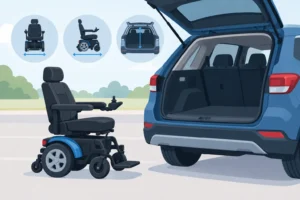

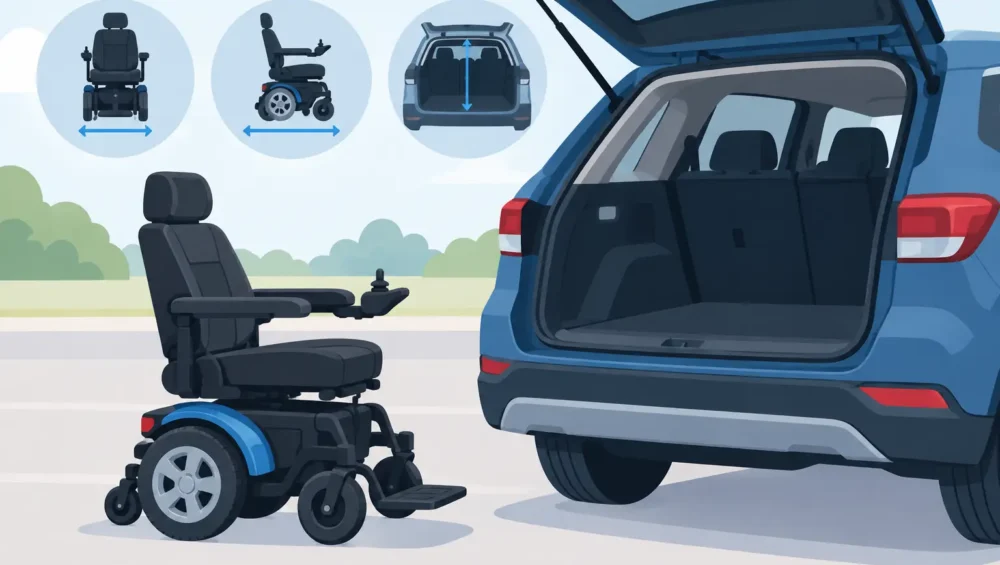
A power chair can make everyday outings feel possible again, but the first practical question is often the same: can power chairs fit cars? The honest answer is yes, many can, but not every power chair will fit every vehicle. A lightweight folding model may travel easily in a sedan trunk, while a larger reclining or heavy-duty chair may need an SUV, van, lift, or trailer.
The right choice starts with more than the chair’s weight. You need to match its folded dimensions, lifting method, battery type, and your own physical ability with the vehicle you use most. Getting these details right means less strain for caregivers, safer loading, and more confidence when it is time to leave home.
Can Power Chairs Fit Cars? It Depends on the Chair and Vehicle
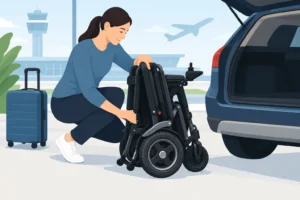
Compact folding power chairs are designed with car travel in mind. Once folded, many can be lifted into a hatchback, crossover, SUV, or larger sedan trunk. Carbon fiber and magnesium designs are particularly useful for people who want a lighter chair without giving up powered independence.
However, a chair described as “portable” is not automatically easy for every person to load. A 40-pound chair may be manageable for one family member and too heavy or awkward for another. The shape matters too. A chair that weighs less but has a bulky folded frame can be harder to position through a narrow trunk opening than a slightly heavier chair that folds into a neat rectangle.
Larger power chairs bring different benefits. Reclining seats can improve comfort and pressure relief. Off-road models offer stability on uneven paths. Bariatric chairs provide wider seating and higher weight capacity, sometimes supporting users up to 440 pounds. These features are valuable, but they typically increase the chair’s size and weight. For regular car travel, they often require a vehicle lift or a more spacious vehicle.
Measure the Vehicle Before Choosing a Chair
Do not rely on the appearance of the trunk alone. Measure the usable space with the trunk open, then compare it with the power chair’s fully folded measurements. Manufacturers may list overall dimensions, but what matters is the size of the chair in its transport position.
Start with the width and height of the trunk opening. This is the point where many buyers run into trouble. A chair might fit inside the cargo area but not pass through the opening because of the trunk lip, rear lights, or angled hatch. Next, measure the cargo floor length and depth. If the chair needs to lie flat, account for the seatback, footrest, joystick, and any parts that cannot be removed.
Also consider the height of the cargo floor from the ground. An SUV may offer more space than a sedan, yet its cargo floor can be higher. That means a heavier chair has to be lifted farther. A low sedan trunk can sometimes be easier to load if the folded chair is compact enough to pass through the opening.
Bring these four measurements when comparing chairs:
- Trunk or hatch opening width
- Trunk or hatch opening height
- Usable cargo depth and floor width
- Cargo floor height from the ground
If possible, measure with the items you normally keep in the car, such as a walker, oxygen equipment, groceries, or a child’s seat. Mobility should fit real life, not just an empty showroom measurement.
Check the Vehicle Payload Too
Vehicle payload is the maximum total weight a vehicle can safely carry, including passengers, luggage, the power chair, and accessories. Most passenger vehicles can carry a lightweight folding chair without concern, but it is still wise to check the label inside the driver’s door frame or the owner’s manual.
This becomes more relevant with a heavy power chair, a vehicle lift, and multiple passengers. Never overload the vehicle or place a chair where it can shift during driving. A properly secured chair protects everyone in the car.
Choose the Right Transport Method
For many families, manual loading is the simplest option. It works best with a compact folding power chair that has a realistic lifting weight for the person handling it. Some chairs can be folded and lifted in one piece, while others allow the battery to be removed first, reducing the weight of the frame.
A portable ramp may help roll a chair into certain vehicles, but the angle must be safe and the chair must be compatible with the ramp setup. Ramps are not a shortcut for lifting into a standard trunk. They are more commonly useful with vans, low-floor vehicle entrances, or accessible vehicle conversions.
A hitch-mounted platform lift can carry a larger chair outside the vehicle. This keeps the cargo area free, but it adds length to the car and exposes the chair to weather and road debris. It must be matched to the chair’s weight, the vehicle’s towing or tongue-weight rating, and local visibility requirements for lights and license plates.
Interior lifts and hoists are another option. These systems can lift a folded chair into an SUV, van, or hatchback with less physical effort. They can be an excellent solution for a caregiver with back or shoulder concerns, although they take up cargo space and should be professionally fitted.
For full-size power chairs, a wheelchair-accessible van may be the most comfortable long-term answer. This is a larger investment, but it allows the user to remain seated in the chair or drive into the vehicle depending on the conversion. It is often the better choice when transfers are difficult or the chair is needed for all-day seating support.
Weight Is More Than a Product Specification
It is tempting to focus only on the lightest number. Yet the best travel chair is not always the lightest chair on the page. A very light model may have a smaller battery range, a lower user-weight capacity, or less suspension for rough sidewalks. A stronger model may be worth the extra pounds if it delivers the seating comfort, stability, and daily range you need.
Think about the full journey. Can the chair travel from the front door to the car over your driveway? Can it handle the shopping center, clinic, park, or family gathering after it is unloaded? Can the person loading it do so repeatedly without risking injury?
For regular car users, a chair with a folding frame, manageable lift weight, removable lithium battery, and simple controls usually offers the best balance. For outdoor users or larger individuals, it may be better to choose a more capable chair and invest in the right vehicle transport equipment rather than compromising on safety or comfort.
Battery Rules Matter When You Travel
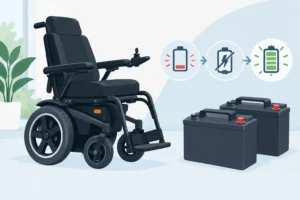
Most modern portable power chairs use lithium batteries because they are lighter and more energy-efficient than traditional lead-acid batteries. For road trips, keep the charger accessible and avoid leaving batteries in extreme heat inside a parked vehicle.
If you plan to fly, battery regulations are different from car travel. Airlines commonly require removable lithium batteries to be carried into the cabin, with limits based on watt-hours and airline policy. Confirm requirements before booking rather than assuming a battery approved for everyday use will be accepted for air travel.
For car transport, turn the chair off, protect the joystick from being knocked, and secure loose accessories. If the battery is removable, make sure it is locked in place or stored safely according to the chair manufacturer’s instructions.
Test the Fit Before You Buy
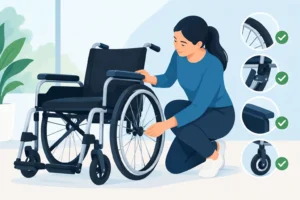
A tape measure is essential, but a real test fit is better. Fold the chair yourself. See whether the controls, footrest, or armrests need adjustment. Practice lifting it with the same person who will load it at home. Then place it into the actual vehicle if possible.
This hands-on check often reveals details that specifications cannot: whether the trunk lip catches the frame, whether the hatch closes without pressure, or whether a caregiver can maintain a safe lifting posture. At Vechair, a guided test drive and product demonstration can help families compare compact, carbon, magnesium, reclining, and heavy-duty options based on the way they actually travel.
A power chair should expand where life can take you, not create a new barrier at the parking lot. Choose a chair and transport setup that feels safe on an ordinary Tuesday, because that is what makes spontaneous coffee visits, appointments, and family outings easier to say yes to.