
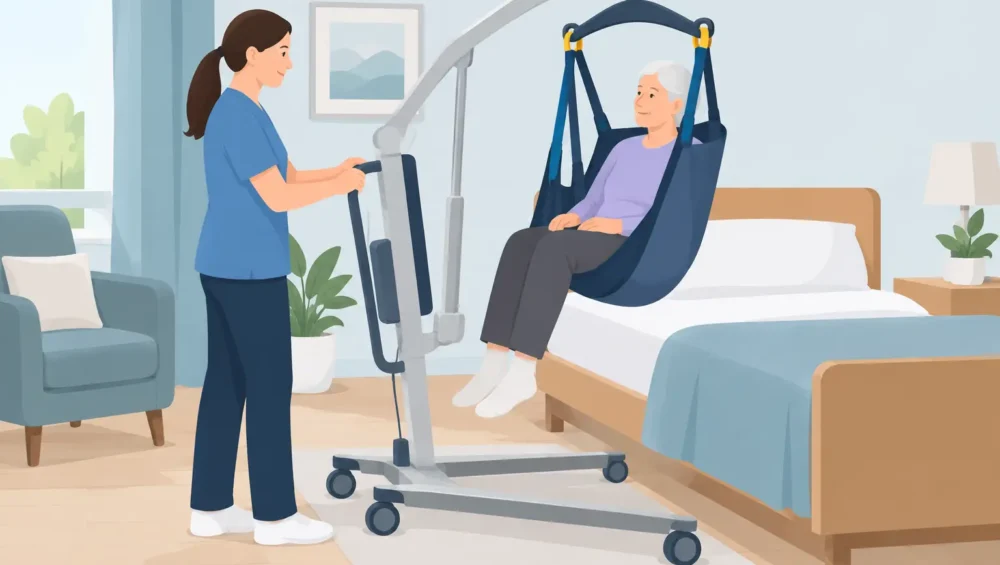
A transfer should never feel like a test of strength. When someone cannot safely stand, pivot, or bear weight, trying to move them by hand can put both people at risk of a fall, skin injury, or back strain. Learning how to use patient hoists properly turns a difficult daily task into a more controlled, dignified routine.
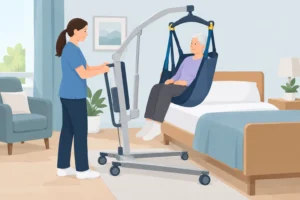
A patient hoist, also called a patient lift, supports a person in a sling while a caregiver moves them between a bed, wheelchair, commode, or chair. It can protect the caregiver’s body while helping the person being transferred feel secure and included in their own care. However, a hoist is only as safe as the setup, sling choice, and technique behind it.
Start With the Right Hoist and Sling
Before the first transfer, confirm that the equipment is suitable for the person and the space where it will be used. Mobile floor hoists are common for home care because they can move between rooms with enough clear floor space. Ceiling hoists may suit a fixed room setup, while sit-to-stand hoists are designed for people who can bear some weight, hold on, and follow instructions. They are not a substitute for a full-support hoist.
The sling matters just as much as the lift. A full-body sling supports the back, thighs, and often the head, making it a common option for people with limited trunk control. Toileting slings allow more access for clothing adjustments but provide less coverage. Some people need a hammock-style sling, a divided-leg sling, or a specialized option for amputees or larger body sizes.
Check the safe working load on both the hoist and the sling. The lower rating sets the limit. A 440-pound hoist does not make a 330-pound sling safe for a 400-pound user. The person’s comfort, body shape, level of muscle control, and clinical needs also affect sling selection. If there is any uncertainty, ask a qualified therapist, nurse, or trained equipment specialist to assess the setup before use.
How to Use Patient Hoists: Prepare Every Transfer
Rushing is where preventable mistakes begin. Give yourself time, explain what is about to happen, and make sure the person is comfortable with the plan. Even a person with limited speech may respond to a calm explanation and clear cues.
Before using the hoist, complete four essential checks:
- Inspect the sling for tears, worn stitching, stretched loops, damaged clips, or signs of contamination.
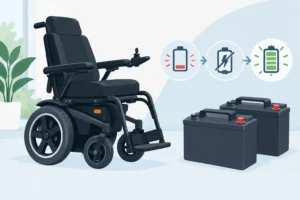
- Confirm the hoist battery is charged, the emergency stop is released, and the handset raises and lowers correctly.
- Clear rugs, cords, footstools, pets, and other obstacles from the transfer route.
- Check that the destination surface is ready, stable, and at an appropriate height.
For a transfer from bed to wheelchair, place the wheelchair close to the bed with the brakes on. Move or remove the footrests so they do not catch the person’s legs. If transferring to a recliner or commode, make sure it cannot roll, tip, or slide. A bed that is too low may make sling positioning harder, while a bed that is too high can leave the person suspended unnecessarily when moving away.
Never use a hoist on a steep slope, across an uneven outdoor surface, or with a low battery that may stop mid-transfer. A mobile hoist needs room for its base legs to open beneath or around the bed, chair, or wheelchair. Measure your furniture and pathways before choosing equipment, particularly in compact homes.
Position the Sling With Care
Sling placement should be comfortable and symmetrical. If the person is in bed, roll them gently onto one side using safe handling techniques. Fold or position the sling behind their back, then roll them onto the other side and pull the remaining section flat. Avoid leaving wrinkles beneath the person, as these can cause discomfort and increase pressure on fragile skin.
Bring the leg sections under each thigh. Depending on the sling design and clinical recommendation, the straps may cross between the legs or attach on the same side. Follow the sling label and its instructions exactly. Crossing straps can improve security for some divided-leg slings, but it is not correct for every model or every user.
When lifting from a wheelchair or chair, lean the person forward only if they can do so safely. Slide the back of the sling down behind them as far as possible, ideally to the tailbone area, then guide the leg sections into place. Never pull forcefully on a person’s arms or shoulders to position the sling.
Check that the sling is not pressing on wounds, feeding tubes, catheters, or painful joints. For users with pressure injuries, contractures, recent surgery, severe osteoporosis, or uncontrolled spasms, a clinician should provide specific transfer guidance.
Attach, Lift, and Move Slowly
Wheel the hoist into position with its base legs opened as required for stability. Center the boom over the person rather than pulling them sideways toward it. Lower the spreader bar until the loops or clips can be attached without strain.
Attach each sling strap to the correct hook or connection point. Take a deliberate second look: the left and right sides should match, the straps should not be twisted, and every attachment must be fully engaged. Keep the person’s arms inside or outside the sling according to its instructions and their comfort needs.
Raise the hoist slowly until the sling becomes taut, then pause. This is the best moment to check that the person feels secure and that the sling is supporting the thighs, back, and head as intended. If anything looks uneven or feels uncomfortable, lower the person back down and correct it. Do not try to adjust major sling placement while someone is fully suspended.
Once the lift is correct, raise only high enough to clear the surface. Keep one hand near the person if needed for reassurance and to prevent unwanted swinging, but do not manually carry their weight. Move the hoist slowly by its handle, walking rather than pulling with your back. Avoid sudden turns.
With a mobile floor hoist, it is often safer to move the person with the base legs in their recommended position rather than widening or narrowing them while the person is suspended. Follow the manufacturer’s instructions for that specific model. Brake guidance can also differ: generally, the hoist’s casters should remain unlocked during lifting so the lift can find its center of gravity, while the wheelchair or bed should be braked. Always follow the instructions supplied with your equipment.
Lower Into Position Without Rushing
Align the person over the center of the wheelchair, chair, commode, or bed. Lower them slowly, using small adjustments to guide their hips toward the back of the seat. Ask them to lean back or place their hands where appropriate if they are able. Make sure clothing and skin are not caught beneath them.
Once their weight is fully supported by the destination surface, release the sling straps and move the hoist away. Remove the sling only if it is comfortable and practical to do so. In some seating situations, a suitable sling may remain in place for a limited period, but this depends on the sling material, the person’s skin condition, and professional advice. Never leave a person sitting on thick, folded, or wrinkled sling fabric.
After the transfer, check their posture. Their hips should be positioned well back, feet supported if seated in a wheelchair, and head comfortably aligned. Ask whether they feel any pulling, pinching, or pain. A successful transfer is not just one that gets from point A to point B. It is one that leaves the person stable, comfortable, and confident.
Common Mistakes That Put Transfers at Risk
The most serious error is using a hoist without training. Reading instructions is essential, but hands-on guidance from a healthcare professional or trained equipment provider is especially valuable for first-time caregivers. Practice with supervision before transferring someone who is frail or medically complex.
Do not exceed weight ratings, improvise with a bedsheet instead of an approved sling, or use a sling with damaged labels or hardware. Do not leave someone unattended while suspended, even for a moment. Avoid lifting by the sling straps alone, and never attempt to catch a falling person during a transfer. Guide them down safely if possible and call for help.
Equipment maintenance also deserves attention. Charge batteries as directed, clean the sling according to its care label, and arrange inspection or servicing if you notice unusual noises, hydraulic problems, loose parts, or inconsistent lifting. Reliable equipment and available spare parts are part of safe long-term care, not an afterthought.
For families choosing their first transfer solution, a demonstration can make the decision much clearer. At Vechair, trained staff can help compare hoist styles, sling options, space requirements, and weight capacities so the equipment supports real daily routines rather than adding another worry.
The goal is not to make transfers look effortless on the first day. It is to make each one calmer, safer, and more familiar, until both caregiver and user can approach the next move with greater confidence.