
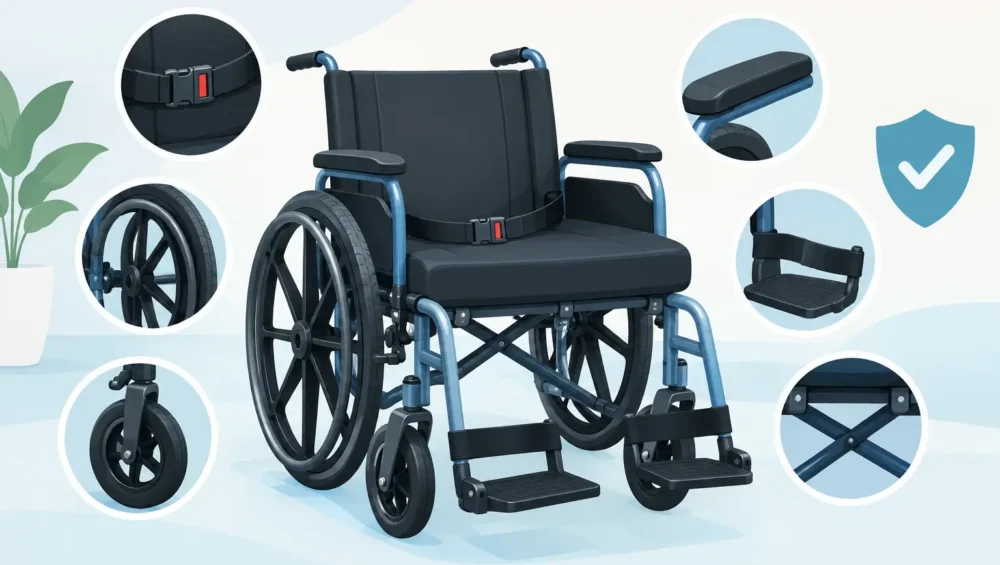
A bariatric wheelchair should do more than state a higher weight limit. The top bariatric wheelchair safety features work together to support the user’s body, control the chair on real surfaces, and give families confidence during everyday movement. A chair that feels stable in a showroom but shifts on a driveway, struggles at a doorway, or lacks the right seating support is not the right long-term solution.
For larger users, safety begins with honest measurements and continues with the details that are easy to overlook: the width of the seat, the chair’s overall footprint, battery placement, braking performance, and the availability of service when a part needs attention. The best choice depends on where the chair will be used, who will assist the user, and whether it needs to travel by car.
A Rated Capacity With a Real Safety Margin
A listed maximum user weight is the first figure most buyers compare, but it should not be the only one. The rating should reflect the complete chair as supplied, including its seating system and standard components. It also needs to account for what the user carries each day, such as a phone, medical items, shopping, or an oxygen device.
For example, a chair rated to 440 pounds may be suitable for a user well below that limit, while someone close to the maximum may need a higher-capacity model to allow a sensible operating margin. This is not about buying more chair than necessary. It is about avoiding excess stress on the frame, motors, tires, brakes, and battery system.
Ask for the manufacturer’s rated capacity rather than relying on a verbal estimate. Do not assume that a wider seat automatically means a higher weight rating. Seat width and structural capacity are related, but they are not the same specification.
Frame Design That Resists Flex and Instability
A high-capacity wheelchair needs a frame engineered for the load, not simply reinforced with a larger seat. Look for a sturdy cross-brace or chassis structure, secure welding, and reinforced mounting points where the wheels, footrests, armrests, and seat connect. On powered models, the motor housings and suspension components should also be designed for the stated capacity.
Frame material matters, but it is not a shortcut to safety. Steel can provide reassuring strength and durability, while aluminum, magnesium, and other modern materials may reduce the chair’s weight for transport. The safer option is the one with a proven load rating, stable geometry, and appropriate construction for its intended terrain.
A test drive is especially useful here. Notice whether the chair feels planted when turning, starting, stopping, and moving across slight changes in surface level. A well-designed chair should not feel loose, twist noticeably, or require constant correction from the user.
Seat Width, Depth, and Pressure Support
A seat that is too narrow can create painful pressure at the hips and thighs. A seat that is excessively wide may reduce posture control and make transfers harder. The right width allows room for normal clothing and movement without squeezing the user or leaving them unsupported.
Seat depth matters just as much. The cushion should support the thighs while leaving clearance behind the knees. If the seat is too short, body weight may concentrate in a smaller area. If it is too deep, the user may slide forward or experience pressure behind the knees.
For people who spend many hours seated, a pressure-relieving cushion, adjustable backrest, and correctly positioned armrests can be safety features, not luxuries. Better posture helps reduce sliding, skin stress, fatigue, and the risk of an unsafe transfer. A reclining function can improve comfort for some users, but it changes the chair’s center of gravity, so it should be used according to the manufacturer’s guidance.
Stability Starts at the Wheels and Base
A wheelchair’s footprint plays a major role in preventing tip risk. Wider wheel spacing and a longer wheelbase can improve stability, particularly for outdoor use or users who need a larger seat. The trade-off is that a larger chair may be less convenient in narrow hallways, compact elevators, and small bathrooms.
Anti-tip wheels are one of the most practical bariatric wheelchair safety features. They help limit rearward tipping when traveling uphill, navigating ramps, or shifting weight during transfers. They are valuable, but they are not permission to climb steep slopes or curbs beyond the chair’s stated limits.
Wheel and tire selection also deserves attention. Larger drive wheels can handle uneven outdoor surfaces more confidently, while solid tires reduce puncture concerns and pneumatic tires can offer a softer ride. Pneumatic tires require regular pressure checks. Underinflated tires can affect steering, braking, range, and stability, especially under a heavier load.
For powered chairs, consider whether the drive configuration suits the environment. Mid-wheel drive can offer a tight turning radius indoors. Rear-wheel drive may feel more predictable at speed and on longer outdoor routes. Front-wheel drive can manage some obstacles well, but its handling characteristics differ. There is no single best setup for every user.
Brakes, Controls, and Powered Chair Protection
On a manual bariatric chair, attendant brakes should be easy for a caregiver to reach and strong enough to hold the chair during transfers. Wheel locks are designed to stabilize the chair while stationary. They should not be used to slow a moving wheelchair.
Powered bariatric wheelchairs need dependable electromagnetic brakes that engage when the joystick is released. The controller should allow the speed to be set appropriately for the user’s reaction time, confidence, and environment. Slower indoor settings can make doorways and crowded spaces easier to manage, while outdoor speed should still leave enough stopping distance for slopes and pedestrians.
A responsive joystick, clear battery display, and low-speed programming are valuable safety aids. So are secure cable routing and protected electronics, particularly if the chair will be used outdoors. For users with limited hand control, alternative controls or caregiver attendant controls may be safer than forcing a standard joystick arrangement.
Battery Placement and Range Planning
A heavier user, frequent hills, rough ground, cold weather, and a reclined seating position can all affect battery range. A larger battery does not remove the need for planning, but it can provide useful reserve capacity for longer days.
The battery should be securely mounted, protected from impact, and charged with the correct approved charger. Do not stretch extension cords across walkways or charge where moisture and heat are present. Families should also know what a low-battery warning looks like and avoid starting a long trip with an uncertain charge.
Transfer Safety Is Part of the Chair Choice
Many incidents occur not while driving, but while getting into or out of the wheelchair. A good bariatric chair supports safe transfers with stable wheel locks, removable or swing-away footrests, armrests suited to the transfer technique, and a seat height that works with the user’s bed, toilet, sofa, or vehicle.
A transfer board, gait belt, or hoist may be appropriate depending on the person’s strength and balance. The right equipment should be selected with professional advice when needed. Caregivers should never pull a person up by the wheelchair armrests or rely on the footplates for support. Footplates are for the feet, not for standing weight.
Before any transfer, turn the power off on an electric chair, engage the brakes where applicable, move footrests clear, and position the chair close to the destination surface. These small habits protect both the user and the caregiver.
Daily Checks and Local Service Support
Even a well-built wheelchair needs routine attention. Before use, check that tires are in good condition, wheel locks or brakes hold firmly, the seat and armrests are secure, and there are no unusual noises, loose fasteners, or damaged cables. On electric models, inspect the charger connection and confirm that the battery indicator is behaving normally.
Service support is a safety feature in practical terms. A chair is only dependable if replacement tires, controllers, batteries, brakes, and other parts can be inspected or replaced when needed. Vechair’s sales, service, and spare-parts approach is designed for this reality, giving users a place to compare configurations, test-drive suitable options, and seek support after purchase.
A bariatric wheelchair should feel secure before it feels impressive. Take measurements, test the chair in the spaces that matter, and choose capacity, seating, and control features that fit the user’s actual routine. The right chair can make daily movement feel less like a risk to manage and more like independence returning.