
A wheelchair cushion can change far more than how a seat feels after lunch. For someone who sits for several hours each day, the best pressure relief cushions can help protect skin, improve positioning, reduce fatigue, and make everyday activities feel more manageable. The right choice depends on the person, their wheelchair, their transfer ability, and how much time they spend seated.
A cushion is not simply an accessory to add softness. It is part of the seating system. It affects pelvic stability, leg position, reach to the wheels or joystick, and the ability to sit comfortably through meals, work, appointments, and travel. For users with reduced sensation, limited mobility, a history of pressure injuries, or changing posture, a professional seating assessment is especially valuable.
What makes a pressure relief cushion effective?
Pressure injuries often develop when the same area of skin and underlying tissue is exposed to pressure for too long. The bony areas beneath the pelvis, particularly the sitting bones and tailbone, are common concern points. Moisture, friction, sliding forward in the chair, poor posture, and limited ability to shift weight can all increase the risk.
An effective pressure relief cushion does not eliminate the need for regular movement and skin checks. Instead, it spreads load over a larger surface area, reduces concentrated pressure, and supports a more stable sitting position. The best design for one user may be unsuitable for another. A highly contoured cushion may improve pelvic alignment for one person, while someone with fluctuating edema or a high risk of skin breakdown may need a different material and setup.
The cushion also has to work with the wheelchair. Seat width, seat depth, backrest angle, footplate height, armrest position, and the user’s body shape all matter. A cushion that is too high may leave the feet unsupported or change access to the joystick. One that is too narrow can create pressure at the hips, while an oversized cushion may not sit securely on the wheelchair base.
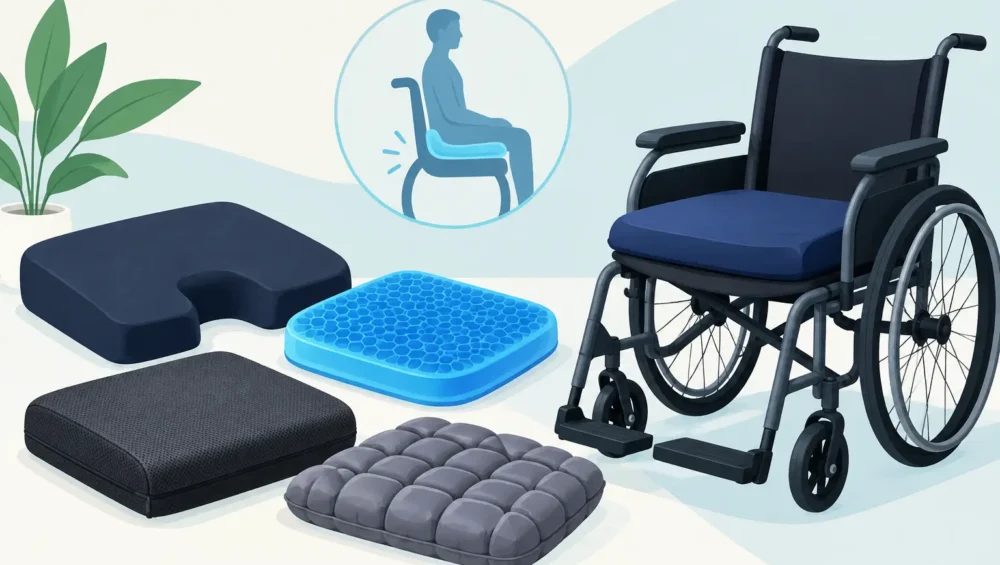
Types of the best pressure relief cushions
High-density foam cushions
Quality foam cushions are often a practical starting point for users who need better comfort, moderate pressure distribution, and stable support without complicated daily adjustments. They can be lightweight, easy to carry, and well suited to active wheelchair users who transfer frequently or fold their chair for transport.
Not all foam performs the same way. Basic foam can compress quickly and lose its supportive shape. Higher-density, multi-layer, or molded foam usually provides more controlled positioning and longer-lasting performance. Contoured foam can help guide the pelvis into a more neutral position, which may reduce sliding and improve comfort.
Foam is not always enough for a person at high risk of pressure injury, particularly if they sit for long periods without independent weight shifts. Still, for many users, it offers a good balance of stability, simplicity, and everyday practicality.
Gel cushions
Gel cushions use fluid-like gel inserts, often combined with foam, to distribute pressure and contour around the body. They can feel comfortable immediately and may work well for users who want more immersion around the sitting bones without moving to a fully air-based system.
The trade-off is weight. Gel cushions can be heavier than foam, which matters when lifting a folding wheelchair into a car or traveling with a lightweight electric wheelchair. Some gel designs may also hold heat, although breathable covers and well-designed foam layers can help manage this. Look for a construction that keeps the gel properly positioned rather than allowing it to shift away from the areas that need support.
Air-cell cushions
Air-cell cushions use interconnected or individually adjustable air compartments. They are widely used for advanced pressure management because the cells can allow the body to immerse into the cushion, helping distribute pressure across a broader area.
They also require more attention. Inflation must be set correctly for the individual user, and it should be checked routinely. Overinflation can make the surface firm and reduce immersion; underinflation can allow the user to bottom out onto the wheelchair seat. Air cushions can be an excellent option for users with high skin-risk needs, but they are not a fit-and-forget solution. They should be assessed, adjusted, and maintained carefully.
Hybrid cushions
Hybrid cushions combine materials such as foam, gel, air, or a fluid insert. This approach can offer a useful middle ground: the stability of foam with enhanced pressure distribution from gel or air. Some designs also provide a shaped base that assists posture while using a softer top layer for comfort.
For people who need both positioning and pressure care, a hybrid model can be worth considering. The key is identifying the main priority. If the user slides forward, has pelvic asymmetry, or leans to one side, positioning may need just as much attention as pressure distribution.
Choose based on sitting time, skin risk, and daily routine
Start by considering what a typical day actually looks like. A person who uses a wheelchair for short outings may need a very different cushion than someone who remains seated for eight to twelve hours. Long sitting time, limited ability to reposition, fragile skin, recent weight loss, incontinence, diabetes, or a past pressure injury all raise the need for more specialized assessment.
Consider these questions before choosing:
- Can the user independently shift weight, or do they need caregiver assistance?
- Has there been redness, skin breakdown, numbness, or pain around the pelvis?
- Does the user slide forward, lean to one side, or feel unstable when reaching?
- Will the cushion be used indoors only, or also for car travel, outdoor use, and longer appointments?
- Can the user or caregiver manage air-pressure checks and regular cushion maintenance?
Comfort matters, but it should not be the only deciding factor. A very soft cushion may initially feel pleasant while offering poor stability. When the pelvis is unstable, the body often compensates by leaning, sliding, or using extra energy to stay upright. That can create discomfort in the back, shoulders, and hips over time.
Fit is as important as the cushion material
A pressure relief cushion should generally match the usable width and depth of the wheelchair seat. It should rest flat and securely, with no curling edges or gaps that could affect balance. The user’s hips should be supported without the cushion pressing tightly against the outer thighs.
Seat height deserves careful attention. Adding a thick cushion can raise the user enough that their feet no longer rest correctly on the footplates. This may increase pressure under the thighs or cause the pelvis to tilt backward. In an electric wheelchair, cushion height can also alter armrest position and joystick access. A small change in height can make daily driving and transfers noticeably harder.
The cover is part of the system too. A breathable, washable cover helps manage heat and moisture. A stretch cover allows the cushion to contour more effectively, while a non-slip base helps keep it from moving. Do not replace a specialized cover with a thick household cover or folded blanket, as this can change pressure distribution and create friction.
Safe habits still matter
Even the best cushion cannot protect skin if the user remains in one position for too long. Regular weight shifts, tilt or recline functions where appropriate, good hydration, and daily skin checks remain essential. A tilt-in-space or reclining electric wheelchair may help some users redistribute pressure, but it should be used according to guidance from a clinician or seating professional.
Check for persistent redness, warmth, discoloration, pain, or broken skin, especially around the tailbone, hips, and sitting bones. For people with reduced sensation, visual checks by a caregiver may be necessary. If redness does not fade after pressure is relieved, seek medical advice promptly.
Cushions also wear out. Foam may flatten, air valves may leak, gel may shift, and covers can lose their protective qualities. Inspect the cushion routinely and replace it when it no longer holds its shape or provides the intended support.
Try the cushion with the wheelchair, not in isolation
A showroom trial can reveal issues that are easy to miss when shopping from specifications alone. Sit in the actual wheelchair, test reaching the joystick or wheels, check foot placement, practice transfers, and spend enough time seated to notice whether the pelvis stays stable. For complex needs, bring the user’s clinician or request guidance from a qualified seating professional.
At Vechair, wheelchair selection is approached as a complete mobility setup, not just a chair purchase. Cushion fit, driving position, body support, and practical daily use should work together, whether the priority is a lightweight folding chair for car travel, a reclining model for longer sitting, or a higher-capacity wheelchair built for dependable support.
The right cushion should help the user feel secure enough to focus on the day ahead: joining family at the table, taking a longer outing, or moving through home with less discomfort and more confidence.