
A hospital bed can change the rhythm of care at home. It can make getting upright for breakfast less exhausting, help a caregiver provide personal care more safely, and give a recovering family member a better chance to rest comfortably. When comparing manual versus powered hospital beds, the right choice is rarely about choosing the most advanced option. It is about matching the bed to the person’s strength, care needs, room layout, and daily routine.
A bed that works well on day one should still be practical after weeks or months of use. That means looking beyond the frame and mattress to consider who will adjust it, how often positions need to change, whether transfers are difficult, and what service support is available if a part needs attention.
Manual Versus Powered Hospital Beds: The Core Difference
Both manual and powered hospital beds are designed to support positioning, recovery, and safer care. The key difference is how the bed moves.
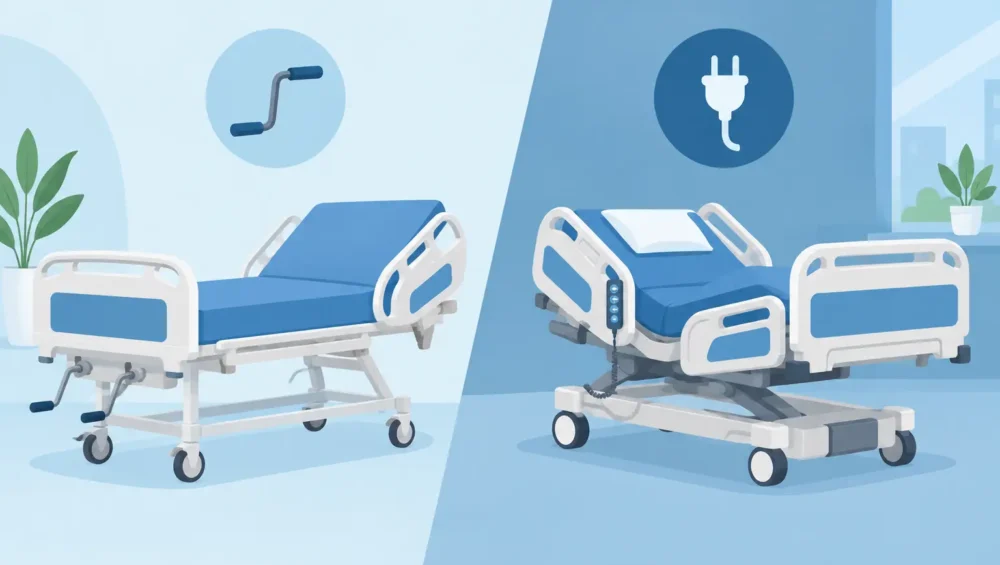
A manual hospital bed uses hand cranks, usually located near the foot of the bed. Depending on the model, separate cranks raise or lower the head section, elevate the legs, and adjust the overall bed height. The mechanism is straightforward, dependable, and does not rely on electricity for these movements.
A powered hospital bed, often called an electric hospital bed, uses a handheld remote control to operate its motors. The user or caregiver can raise the backrest, lift the leg section, and adjust bed height with the push of a button. Some models also offer preset positions, such as a seated position for meals or a low position for safer entry and exit.
The choice becomes clearer once you ask a practical question: can the person in bed comfortably manage a crank, or will someone else need to make every adjustment?
When a Manual Hospital Bed Makes Sense
Manual beds are often a sensible option for short-term recovery or situations where position changes are occasional rather than constant. Their simpler design can make them appealing for households that want essential hospital-bed functions without motors, wiring, or controls.
They can also be useful where power access is inconvenient or where families want the reassurance that the bed can still be adjusted during a power outage. Because there are fewer electrical components, maintenance needs may be simpler over the long term.
The trade-off is physical effort. Turning a crank while supporting a person’s comfort can be tiring, particularly for older caregivers or anyone with back, shoulder, or wrist limitations. Raising the bed to a safer working height may also take time. If a care recipient needs frequent repositioning because of pain, swelling, breathing discomfort, or limited mobility, that effort adds up quickly.
A manual bed is not automatically the lower-quality choice. It is the right choice when its limits match the household’s actual needs. For a user who can sit up independently and only needs occasional elevation, a well-built manual bed can provide dependable support without unnecessary complexity.
Best situations for a manual bed
Manual operation is often suitable for temporary rehabilitation, light assistance needs, and homes with a capable caregiver who does not mind making occasional adjustments. It may also suit families working within a tighter budget who still need side rails, adjustable sections, and a proper medical mattress.
However, affordability should be considered over the full care period. A lower initial cost may not feel like a saving if the caregiver is lifting, bending, and cranking several times every day.
Why Powered Beds Can Improve Daily Care
A powered hospital bed reduces the physical work behind routine care. With a remote control, the user can often adjust their own position without waiting for assistance. That small amount of control can restore confidence for someone who feels dependent after surgery, illness, or a decline in mobility.
For caregivers, electric adjustment can make a major difference. Raising the bed before changing clothing, assisting with hygiene, or helping with a transfer reduces the need to bend over at a low angle. Lowering the bed before the person gets out can also support safer transfers, especially when used alongside mobility aids or a transfer hoist.
Powered positioning can be valuable for people who spend long periods in bed. Elevating the backrest may make reading, eating, video calls, and breathing more comfortable. Raising the legs may help certain users rest more comfortably, although specific medical positioning should always follow advice from a qualified clinician.
The convenience is real, but so are the requirements. A powered bed needs a nearby electrical outlet, sensible cable management, and dependable service support. Motors, hand controls, and actuators are working parts. Ask about warranty coverage, spare-part availability, and whether local technicians can inspect or repair the bed if needed.
The user’s independence matters
A remote-controlled bed can offer more than comfort. For a person with enough hand control to use the buttons, it can reduce the number of times they need to call for help. They may be able to sit up before a meal, lower the bed before standing, or shift position when discomfort starts.
That does not mean every user should operate the bed alone. People with confusion, poor judgment, severe weakness, or a high fall risk may need caregiver supervision. Controls should be kept accessible, but the care plan should remain safe for the individual.
Compare the Features That Affect Real Life
Price matters, but it should not be the first comparison. Start with the tasks the bed must support every day.
Height adjustment is one of the most useful functions for caregiving. A bed that rises can bring the person closer to a safer working level for the caregiver. A bed that lowers can make it easier for someone to place their feet firmly on the floor before standing. If transfers are part of the routine, powered height adjustment is usually worth serious consideration.
Backrest and leg adjustment affect comfort, circulation, eating, and rest. Manual cranks can achieve these positions, but powered controls make frequent changes much easier. Look for smooth movement and a stable frame that does not feel loose or uneven when sections are raised.
Weight capacity must include the user, mattress, bedding, and any accessories used on the bed. A larger user may need a reinforced frame and a wider sleeping surface, not simply a standard bed with a higher stated limit. Never treat capacity as a minor specification.
Side rails need careful thought. They can provide support during repositioning and reduce the chance of rolling out of bed, but they are not appropriate for every person. Some users can become trapped or attempt to climb over them. The rail design, mattress height, and level of supervision all matter.
Mattress compatibility is equally important. A supportive medical mattress can help with comfort and pressure management, while an alternating-pressure mattress may be recommended for users at risk of pressure injuries. Make sure the mattress fits the bed frame correctly and does not create unsafe gaps around the rails.
Room Planning and Power Safety
Before ordering any hospital bed, measure the room, doorway, elevator, and route from the entrance to the bedroom. Hospital beds are larger and heavier than they appear in a product image, particularly once rails, a mattress, and accessories are included.
Place the bed where caregivers can access both sides if possible. Leave enough room for a wheelchair, walker, or hoist if those are part of the care routine. The user should also be able to reach a light, phone, water, and remote without stretching or twisting.
For powered beds, use a properly grounded wall outlet and keep cords away from walkways, wheels, and transfer areas. Avoid running the cable under rugs or relying on overloaded extension cords. During a power interruption, most electric beds will not move normally, so ask whether the model has a battery backup or manual emergency lowering feature.
Cost Should Include Ownership, Not Just Purchase Price
Manual beds typically cost less upfront because they do not use electric motors and remote controls. Powered beds cost more, but their value can be easier to see when care is frequent, when the user can benefit from independent adjustment, or when caregiver strain is becoming a concern.
Consider delivery, installation, mattress type, rails, overbed tables, servicing, and replacement parts as part of the decision. A reliable supplier should explain what is included, demonstrate the controls, and provide clear support if adjustments or repairs are needed later.
If possible, see the bed in person. Test the control buttons, listen to the motor movement, check how easily the rails operate, and imagine a real transfer rather than simply lying down for a minute. Good medical equipment should feel reassuring, not intimidating.
The best hospital bed is the one that lets the user rest with dignity while making care safer for everyone around them. Choose the model that fits the care routine you have now, while leaving enough support for the changes recovery or long-term care may bring.