
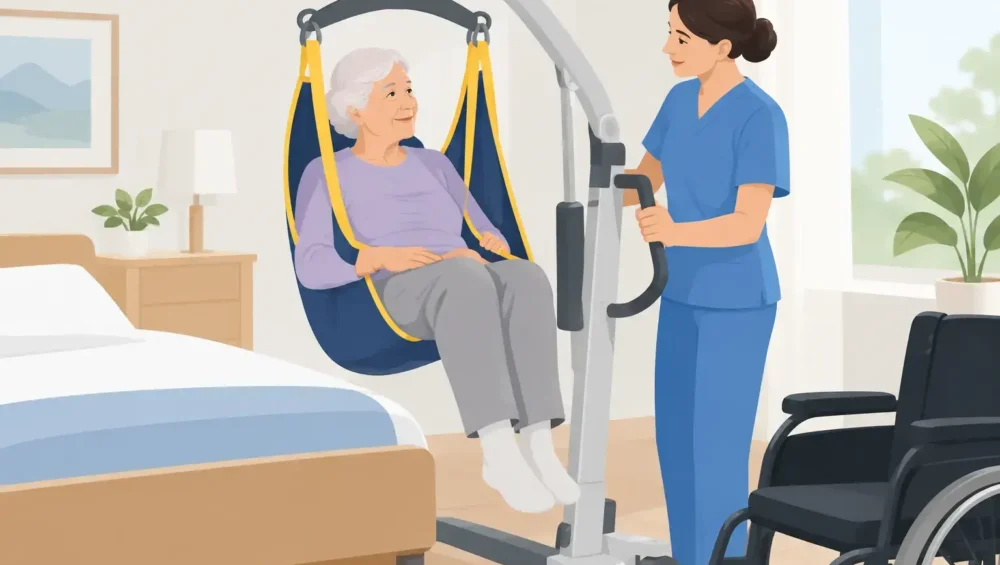
A transfer that feels rushed, awkward, or painful can make an older adult hesitant to leave the bed, shower, or favorite chair. The best transfer slings for elderly loved ones help turn that difficult moment into a more secure, dignified routine. But the right sling is not simply the softest option or the one with the highest weight rating. It must fit the person, the hoist, the task, and the caregiver’s ability to use it safely.
For families choosing equipment for the first time, the goal is clear: reduce physical strain while preserving comfort, confidence, and as much independence as possible. A well-chosen sling can support safer transfers between bed, wheelchair, commode, and recliner. A poorly matched one can cause discomfort, skin pressure, poor positioning, or an unsafe lift.
Start With the Transfer, Not the Sling
Before comparing fabrics or strap colors, identify exactly how the sling will be used. A person who needs full support from bed to wheelchair has very different needs from someone who can bear some weight and mainly needs help standing from a chair.
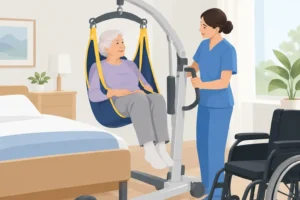
A full-body sling is generally used with a passive patient hoist when the person cannot safely stand, has limited trunk control, or needs extensive support during the lift. These slings cradle the body through the back and under the thighs. Many designs also provide head support, which can be especially helpful for users with weak neck or upper-body control.
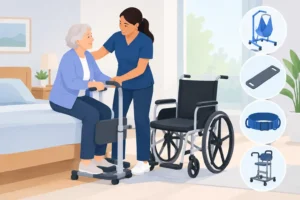
Standing or transfer slings are different. They work with a standing hoist and are intended for people who can bear weight through their legs, follow instructions, and hold their upper body reasonably upright. They support the torso during a sit-to-stand transfer but do not replace the support of a full-body sling. Using a standing sling for a person who cannot bear weight can be dangerous.
Toileting slings are designed with an opening that gives caregivers access for clothing adjustment and hygiene. They can make bathroom routines easier, but the opening means they may offer less overall support than a standard full-body model. They are best for people with enough trunk stability and comfort in that style of sling.
What Makes the Best Transfer Slings for Elderly Adults?
The right sling should create a stable, comfortable position from the moment lifting begins until the person is fully settled. That depends on several practical details working together.
Support where the person needs it
Consider head, neck, back, hip, and thigh support. A person with poor trunk control, fatigue, or neurological conditions may need a full-body sling with integrated head support. Someone with good head control may prefer a model without it because it can feel less bulky behind the shoulders.
Leg support also matters. Divided-leg slings have separate sections that pass under each thigh, offering flexible positioning and easier application for some transfers. Hammock-style slings create a more enclosed seating position and may feel more secure for people who tend to lean or slide. Neither design is automatically better. Comfort, posture, and caregiver technique should guide the choice.
Correct size, not a generous guess
Sizing is a safety feature. A sling that is too large can allow the user to slide or sit in an unstable position. One that is too small can press into the thighs, shoulders, or underarms. Weight capacity is only one part of sizing. Follow the manufacturer’s measurements for torso width, hip circumference, thigh length, and body shape.
For bariatric users, choose equipment designed for the required load from end to end. The sling, hoist, spreader bar, and any seating equipment must all have appropriate weight ratings. Do not assume a high-capacity hoist makes every sling suitable for a higher-weight user.
Fabric suited to the daily routine
Fabric affects comfort, hygiene, drying time, and how easily caregivers can position the sling. Padded polyester is often comfortable for regular dry transfers and may distribute pressure well. Mesh is commonly chosen for showering and bathing because it allows water to drain and dries faster. It can also reduce the need to remove the sling immediately after a wet transfer.
That convenience has a trade-off. Mesh may feel cooler or less cushioned, while heavily padded slings can take longer to dry and may be less practical for shower use. For someone at risk of skin irritation or pressure injuries, seek advice from a clinician on the most appropriate fabric and transfer schedule.
Compatible loops, clips, and spreader bars
A sling and hoist are a system. They must be compatible according to the equipment manufacturer’s instructions. Some slings use loop straps with several length settings, while others use clips or specialized attachments. Loop styles can help adjust the person’s seated angle, but only when caregivers understand how to attach the loops evenly and correctly.
Never mix attachment systems based on appearance alone. A sling that seems to fit a spreader bar may not have been tested for that combination. Confirm compatibility before purchase and before the first lift.
Comfort Includes Dignity and Positioning
A transfer sling should not leave the person feeling exposed, pinched, or suspended in an uncomfortable posture. Ask whether the design supports a natural seated position in the wheelchair and whether it is easy to remove after the transfer. If the sling stays behind the user for a short time, check that it does not bunch beneath the hips or create pressure points.
For many older adults, modesty is just as important as physical comfort. A sling with sufficient coverage can make transfers feel less clinical, particularly when assistance is needed in the bathroom or bedroom. Explain each step before moving, keep the person covered where possible, and allow time for them to participate. Even small choices, such as holding a handrail or selecting a preferred chair, can support a sense of control.
Do Not Skip Assessment and Training
The safest purchase decision often begins with a professional assessment. A physical therapist, occupational therapist, nurse, or qualified mobility specialist can evaluate the user’s strength, sitting balance, skin condition, joint limitations, cognitive awareness, and transfer environment.
Training matters just as much as the product. Caregivers should learn how to position the sling without dragging across fragile skin, attach all straps securely, keep the hoist base positioned correctly, and check the person’s alignment before lifting fully. The first transfer should be slow and supervised, ideally in a clear area with the bed or chair properly prepared.
Before every use, inspect the sling for frayed stitching, worn straps, damaged clips, discoloration, or a faded identification label. Remove damaged equipment from service. Follow the manufacturer’s washing instructions because incorrect laundering can weaken the fabric or affect safety labels.
Match the Sling to the Home Setup
A good sling cannot compensate for a hoist that does not fit the room. Measure doorways, bed clearance, chair height, and the floor area needed to maneuver the hoist. Thick rugs, narrow bathrooms, and low-clearance furniture can make a transfer more difficult than expected.
For home care, it is also worth considering who will use the equipment most often. A spouse or adult child may need a sling that is easy to place and a hoist that feels manageable in a tight space. Professional caregivers may prioritize quick-drying fabric, clear size labels, and models that suit different transfer tasks. When possible, a hands-on demonstration is far more useful than choosing from a photo alone.
Vechair approaches mobility equipment as practical daily-life technology, not just medical hardware. A proper demonstration helps families understand how the sling, hoist, wheelchair, and seating position work together before bringing the equipment into the home.
Questions to Ask Before You Buy
Ask whether the user can bear weight, sit upright, and support their head. Confirm the user’s measurements and the sling’s safe working load. Check whether the sling is intended for dry transfers, showering, toileting, or extended sitting. Finally, verify that it is approved for the specific hoist and spreader bar you own or plan to purchase.
It is also wise to ask about cleaning guidance, replacement availability, and how often the sling should be inspected or replaced. A lower-priced sling is not a value if it is uncomfortable, incompatible, or difficult for caregivers to use correctly.
The best choice is the one that makes the next transfer feel calmer for everyone involved. When an older adult is well supported and caregivers feel properly trained, moving from bed to chair can become less of a daily worry and more of a confident step toward comfort, connection, and independence.