
Assistive Technology That Supports Everyday FreedomCategoriesUncategorized

Assistive Technology That Supports Everyday Freedom

A trip from the bedroom to the kitchen should not require a recovery period. Yet for many people living with age-related weakness, injury, pain, or a long-term condition, small daily distances can become exhausting calculations. Assistive technology helps turn those calculations into practical choices, supporting safer movement, greater comfort, and more control over everyday life.

The right device is not simply the one with the most features or the lowest weight. It is the one that fits the person, the places they go, and the support available when it needs adjustment or repair. For a first-time buyer, that distinction can make the difference between a device that sits unused and one that restores confidence.

What Assistive Technology Means for Mobility

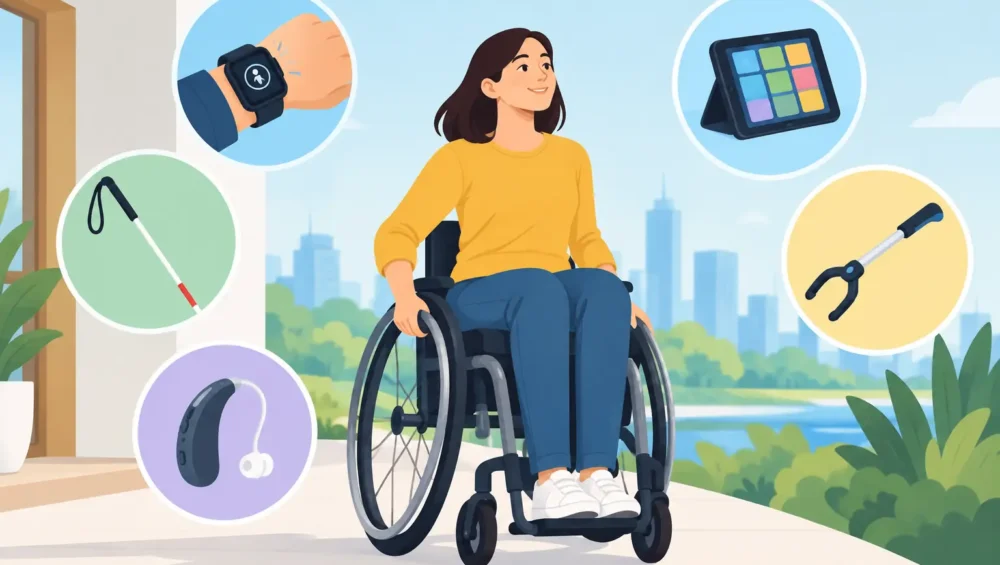
Assistive technology is any equipment that helps a person perform tasks that may otherwise be difficult or unsafe. It can include a cane, walker, transfer hoist, hospital bed, manual wheelchair, mobility scooter, or electric wheelchair. Some tools provide stability. Others reduce the physical effort of moving, standing, transferring, or managing daily care.

For mobility, the goal is rarely just getting from point A to point B. A well-chosen device can help someone join family meals, move through a supermarket without fatigue, travel to appointments, spend time outdoors, or remain involved in work and social life. That is why mobility equipment should be treated as personal lifestyle technology, not as a one-size-fits-all medical purchase.

A person recovering from surgery may need a temporary manual wheelchair with easy footrests and caregiver-friendly handling. Someone with limited upper-body strength may benefit more from a compact electric wheelchair. A user who enjoys parks, uneven driveways, or longer outdoor trips may need larger tires, stronger suspension, and a higher-capacity battery. The needs may share a category, but the solution can be very different.

Start With the Person, Not the Product

Before comparing chair materials, motors, or folding mechanisms, consider how the user moves now and where support is needed. Is walking painful, unsafe, tiring, or impossible over certain distances? Does the person need help only outside the home, or throughout the day? Can they transfer independently from a bed or car seat?

Comfort and posture matter as much as movement. A chair that is too wide can be difficult to propel or maneuver through doorways. One that is too narrow can cause pressure, discomfort, and poor positioning. Seat height, armrest placement, foot support, backrest angle, and cushion type all affect whether a person can use the device comfortably for more than a short trip.

It also helps to separate the user’s priorities from the caregiver’s priorities. The user may value independence, appearance, and the ability to go out alone. A caregiver may need easier transfers, manageable lifting weight, a compact folded size, and dependable controls. The best decision respects both perspectives without removing the user from the conversation.

Questions worth answering before a test drive

Think through the user’s body weight, height, balance, hand strength, and ability to sit for extended periods. Then consider the routine: apartment hallways, elevators, car trunks, shopping centers, rough pavement, ramps, grass, or long outdoor routes all place different demands on a mobility device.

Also consider how often the chair will be transported. An ultra-lightweight carbon or magnesium electric wheelchair can be a major advantage for car users and family members who need to lift it. However, very lightweight models may not offer the same ride quality, seat size, ground clearance, or heavy-duty capacity as a larger outdoor model. There is always a trade-off, and that is normal.

Choosing the Right Type of Mobility Support

Manual wheelchairs remain a sensible option for many users, particularly when the chair is needed occasionally, when a caregiver is available, or when simplicity is the priority. They are generally easier to store and do not require charging. But self-propelling a manual chair demands shoulder strength and can be tiring over longer distances or slopes.

Electric wheelchairs are designed for users who need powered mobility in a compact, controllable form. They can be especially useful for people with reduced strength, limited stamina, or conditions that make manual propulsion difficult. Folding models suit users who travel by car, while automatic folding designs reduce handling effort. Reclining models can provide added comfort and positioning support, although they may be heavier and require more space.

Mobility scooters can be a strong choice for users who can sit upright, transfer safely, and steer with adequate hand control. They often provide a comfortable ride for errands and longer outdoor use. Their larger turning radius and size can make them less practical in tight homes, small elevators, or narrow retail aisles than a compact electric wheelchair.

For users with higher body-weight requirements, bariatric equipment should never be treated as a standard chair with a larger seat. Frame strength, motor performance, wheel stability, seat dimensions, and rated weight capacity must all be appropriate. Models rated up to 440 pounds can offer needed support, but buyers should also check whether the chair will fit through the home’s doorways and whether the vehicle can transport it.

Features That Matter in Daily Use

Specifications are useful when they answer a real-life question. A chair’s weight matters if it must be lifted into a trunk. Its folded dimensions matter if storage space is limited. Battery range matters if the user plans to take longer outings without anxiety about getting home. Motor power and tire design matter when ramps, uneven sidewalks, or outdoor terrain are part of the route.

Look closely at controls as well. A joystick should feel responsive without requiring excessive force or awkward wrist movement. Some users may need an attendant control, adjustable armrests, or a different control position. Test the turning response at low speed, not only the top speed. Indoor independence depends on the ability to approach a table, turn near a doorway, and navigate around furniture calmly.

Safety features deserve equal attention. Reliable brakes, anti-tip wheels, a stable seating position, visible lights where appropriate, and a properly fitted seat belt all contribute to safer use. No device eliminates risk on its own. Users and caregivers still need to understand slope limits, wet-surface caution, charging practices, and the effect of bags or accessories on balance.

Do not overlook service and spare parts

Mobility equipment is used hard. Tires wear, batteries lose capacity, chargers can fail, and controls may need adjustment. A low purchase price can become costly if replacement parts, qualified repairs, or warranty support are difficult to access.

Ask what is covered, for how long, and who performs the service. Motors, batteries, chargers, controllers, and structural components do not always have the same warranty terms. It is also sensible to ask about turnaround time and whether common spare parts are available locally. Dependable after-sales care is not an extra feature. It is part of what keeps a mobility device useful.

Why a Test Drive Changes the Decision

Photos and dimensions cannot show how a chair feels over a doorway threshold or how confidently a user can reach the controller. A hands-on test drive gives the user a chance to check turning space, seating comfort, braking, visibility, and transfer height. It also reveals practical concerns that may not appear on a product page, such as whether the footrests interfere with a favorite chair at home or whether a caregiver can manage the folded frame.

Bring real questions to the appointment. Mention the vehicle model, home layout, body-weight requirement, outdoor terrain, and typical daily travel distance. If possible, measure narrow doorways, elevator entrances, and trunk openings beforehand. A mobility specialist can give more useful guidance when the situation is specific.

Assistive Technology Should Grow With Real Life

A person’s needs can change after rehabilitation, with progressive conditions, or as a caregiver’s capacity changes. Choosing a device with enough capability for the next stage can be wise, but buying an oversized, complicated chair “just in case” may create unnecessary cost and difficulty today. The right approach depends on likely needs, professional clinical advice where appropriate, and a realistic view of the user’s routine.

Assistive technology works best when it feels like a natural part of life: a chair that fits in the car, a scooter that makes an outing enjoyable again, or a transfer aid that protects both the care recipient and caregiver. Start with the moments the person wants back, then choose the equipment that helps make those moments possible.

Manual Versus Powered Hospital Beds: Which Fits?CategoriesUncategorized

Manual Versus Powered Hospital Beds: Which Fits?

A hospital bed can change the rhythm of care at home. It can make getting upright for breakfast less exhausting, help a caregiver provide personal care more safely, and give a recovering family member a better chance to rest comfortably. When comparing manual versus powered hospital beds, the right choice is rarely about choosing the most advanced option. It is about matching the bed to the person’s strength, care needs, room layout, and daily routine.

A bed that works well on day one should still be practical after weeks or months of use. That means looking beyond the frame and mattress to consider who will adjust it, how often positions need to change, whether transfers are difficult, and what service support is available if a part needs attention.

Manual Versus Powered Hospital Beds: The Core Difference

Both manual and powered hospital beds are designed to support positioning, recovery, and safer care. The key difference is how the bed moves.

A manual hospital bed uses hand cranks, usually located near the foot of the bed. Depending on the model, separate cranks raise or lower the head section, elevate the legs, and adjust the overall bed height. The mechanism is straightforward, dependable, and does not rely on electricity for these movements.

A powered hospital bed, often called an electric hospital bed, uses a handheld remote control to operate its motors. The user or caregiver can raise the backrest, lift the leg section, and adjust bed height with the push of a button. Some models also offer preset positions, such as a seated position for meals or a low position for safer entry and exit.

The choice becomes clearer once you ask a practical question: can the person in bed comfortably manage a crank, or will someone else need to make every adjustment?

When a Manual Hospital Bed Makes Sense

Manual beds are often a sensible option for short-term recovery or situations where position changes are occasional rather than constant. Their simpler design can make them appealing for households that want essential hospital-bed functions without motors, wiring, or controls.

They can also be useful where power access is inconvenient or where families want the reassurance that the bed can still be adjusted during a power outage. Because there are fewer electrical components, maintenance needs may be simpler over the long term.

The trade-off is physical effort. Turning a crank while supporting a person’s comfort can be tiring, particularly for older caregivers or anyone with back, shoulder, or wrist limitations. Raising the bed to a safer working height may also take time. If a care recipient needs frequent repositioning because of pain, swelling, breathing discomfort, or limited mobility, that effort adds up quickly.

A manual bed is not automatically the lower-quality choice. It is the right choice when its limits match the household’s actual needs. For a user who can sit up independently and only needs occasional elevation, a well-built manual bed can provide dependable support without unnecessary complexity.

Best situations for a manual bed

Manual operation is often suitable for temporary rehabilitation, light assistance needs, and homes with a capable caregiver who does not mind making occasional adjustments. It may also suit families working within a tighter budget who still need side rails, adjustable sections, and a proper medical mattress.

However, affordability should be considered over the full care period. A lower initial cost may not feel like a saving if the caregiver is lifting, bending, and cranking several times every day.

Why Powered Beds Can Improve Daily Care

A powered hospital bed reduces the physical work behind routine care. With a remote control, the user can often adjust their own position without waiting for assistance. That small amount of control can restore confidence for someone who feels dependent after surgery, illness, or a decline in mobility.

For caregivers, electric adjustment can make a major difference. Raising the bed before changing clothing, assisting with hygiene, or helping with a transfer reduces the need to bend over at a low angle. Lowering the bed before the person gets out can also support safer transfers, especially when used alongside mobility aids or a transfer hoist.

Powered positioning can be valuable for people who spend long periods in bed. Elevating the backrest may make reading, eating, video calls, and breathing more comfortable. Raising the legs may help certain users rest more comfortably, although specific medical positioning should always follow advice from a qualified clinician.

The convenience is real, but so are the requirements. A powered bed needs a nearby electrical outlet, sensible cable management, and dependable service support. Motors, hand controls, and actuators are working parts. Ask about warranty coverage, spare-part availability, and whether local technicians can inspect or repair the bed if needed.

The user’s independence matters

A remote-controlled bed can offer more than comfort. For a person with enough hand control to use the buttons, it can reduce the number of times they need to call for help. They may be able to sit up before a meal, lower the bed before standing, or shift position when discomfort starts.

That does not mean every user should operate the bed alone. People with confusion, poor judgment, severe weakness, or a high fall risk may need caregiver supervision. Controls should be kept accessible, but the care plan should remain safe for the individual.

Compare the Features That Affect Real Life

Price matters, but it should not be the first comparison. Start with the tasks the bed must support every day.

Height adjustment is one of the most useful functions for caregiving. A bed that rises can bring the person closer to a safer working level for the caregiver. A bed that lowers can make it easier for someone to place their feet firmly on the floor before standing. If transfers are part of the routine, powered height adjustment is usually worth serious consideration.

Backrest and leg adjustment affect comfort, circulation, eating, and rest. Manual cranks can achieve these positions, but powered controls make frequent changes much easier. Look for smooth movement and a stable frame that does not feel loose or uneven when sections are raised.

Weight capacity must include the user, mattress, bedding, and any accessories used on the bed. A larger user may need a reinforced frame and a wider sleeping surface, not simply a standard bed with a higher stated limit. Never treat capacity as a minor specification.

Side rails need careful thought. They can provide support during repositioning and reduce the chance of rolling out of bed, but they are not appropriate for every person. Some users can become trapped or attempt to climb over them. The rail design, mattress height, and level of supervision all matter.

Mattress compatibility is equally important. A supportive medical mattress can help with comfort and pressure management, while an alternating-pressure mattress may be recommended for users at risk of pressure injuries. Make sure the mattress fits the bed frame correctly and does not create unsafe gaps around the rails.

Room Planning and Power Safety

Before ordering any hospital bed, measure the room, doorway, elevator, and route from the entrance to the bedroom. Hospital beds are larger and heavier than they appear in a product image, particularly once rails, a mattress, and accessories are included.

Place the bed where caregivers can access both sides if possible. Leave enough room for a wheelchair, walker, or hoist if those are part of the care routine. The user should also be able to reach a light, phone, water, and remote without stretching or twisting.

For powered beds, use a properly grounded wall outlet and keep cords away from walkways, wheels, and transfer areas. Avoid running the cable under rugs or relying on overloaded extension cords. During a power interruption, most electric beds will not move normally, so ask whether the model has a battery backup or manual emergency lowering feature.

Cost Should Include Ownership, Not Just Purchase Price

Manual beds typically cost less upfront because they do not use electric motors and remote controls. Powered beds cost more, but their value can be easier to see when care is frequent, when the user can benefit from independent adjustment, or when caregiver strain is becoming a concern.

Consider delivery, installation, mattress type, rails, overbed tables, servicing, and replacement parts as part of the decision. A reliable supplier should explain what is included, demonstrate the controls, and provide clear support if adjustments or repairs are needed later.

If possible, see the bed in person. Test the control buttons, listen to the motor movement, check how easily the rails operate, and imagine a real transfer rather than simply lying down for a minute. Good medical equipment should feel reassuring, not intimidating.

The best hospital bed is the one that lets the user rest with dignity while making care safer for everyone around them. Choose the model that fits the care routine you have now, while leaving enough support for the changes recovery or long-term care may bring.

What Wheelchair Repair Costs Can Look LikeCategoriesUncategorized

What Wheelchair Repair Costs Can Look Like

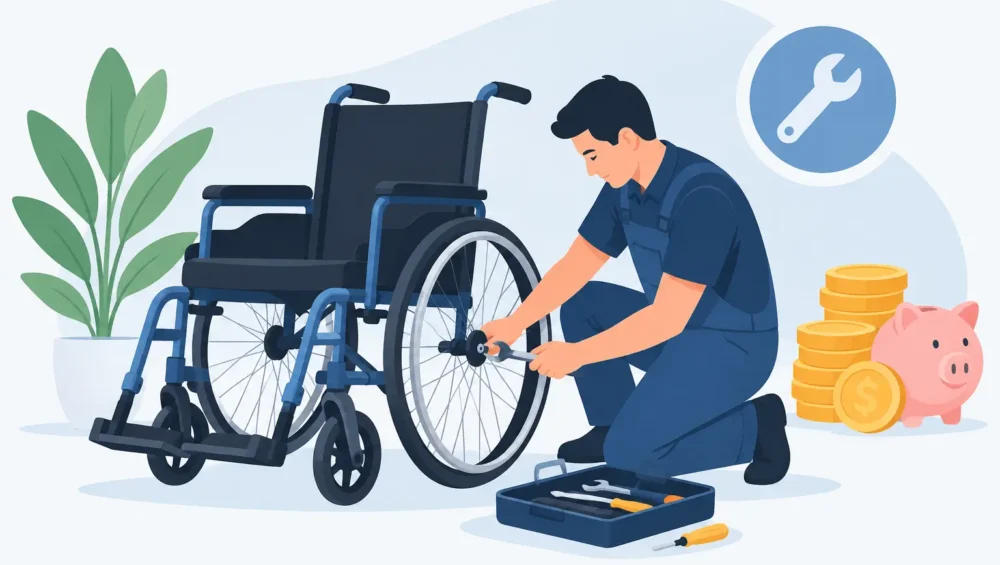
A wheelchair that suddenly loses power, pulls to one side, or will not fold properly can disrupt far more than a day’s plans. It can affect work, family visits, medical appointments, and the confidence to move independently. Wheelchair repair costs can be modest for a tire, tube, or loose connection, but more significant when a battery, motor, controller, or structural component is involved.

The practical question is not simply, “How much will it cost?” It is, “What is wrong, can it be repaired safely, and will the repair restore dependable daily use?” A proper assessment helps prevent a small problem from becoming an expensive breakdown.

What affects wheelchair repair costs?

The same symptom can have several causes. A power wheelchair that will not start may have a flat battery, a worn charger, a damaged charging port, a joystick fault, or a controller issue. Replacing parts before identifying the cause can waste both time and money.

The biggest cost factors are the wheelchair type, the failed component, labor time, and parts availability. Manual wheelchairs are usually simpler to service because they have fewer electronic systems. Electric wheelchairs and mobility scooters need more specialized diagnosis, particularly for wiring, motors, batteries, controllers, and programming.

Chair design also matters. An ultra-lightweight carbon or magnesium folding chair may require model-specific parts and careful handling. A heavy-duty off-road or bariatric chair may use larger tires, stronger motors, and reinforced components. Reclining, automatic-folding, and standing functions add convenience, but they also introduce actuators and mechanisms that require trained service.

Labor charges vary by provider and location. A workshop repair is often less expensive than an on-site callout, while an urgent repair, a difficult-to-reach fault, or a chair that needs repeated testing can add time. Before approving work, ask for a written estimate that separates diagnosis, labor, parts, and any collection or delivery fees.

Typical diagnostic and labor charges

A basic inspection commonly costs about $40 to $120, though some service providers apply that amount toward the final repair if you proceed. General labor may range from $75 to $150 per hour. These are planning figures, not fixed prices: local rates, chair brand, and the availability of genuine parts can shift the total.

A technician should check the full system, not only the obvious symptom. For example, replacing a battery without testing the charger and charging connection may leave the user with the same problem a week later.

Common wheelchair repairs and price ranges

The following ranges reflect common U.S. repair planning costs for parts and basic labor. Complex power-chair repairs, premium components, and proprietary parts can be higher. A service inspection provides the only reliable quote for a specific wheelchair.

| Repair or part | Typical estimated cost | What can change the price | |—|—:|—| | Tire, inner tube, or solid tire replacement | $20-$150 per wheel | Tire size, solid versus pneumatic design, and labor | | Caster wheel or front fork repair | $40-$250 | Bearing damage, fork alignment, and chair model | | Manual wheelchair brake or armrest repair | $30-$200 | Replacement hardware and frame condition | | Battery replacement | $150-$500 each | Battery capacity, chemistry, and whether both batteries should be replaced | | Charger replacement | $60-$250 | Output rating and connector type | | Joystick or control panel replacement | $150-$600 | Compatibility, programming, and water damage | | Wiring, connector, or charging-port repair | $100-$400 | Location of damage and diagnostic time | | Motor or gearbox repair/replacement | $300-$1,200+ | Motor type, wheel assembly, and parts availability | | Controller replacement | $300-$1,200+ | Programming, model compatibility, and system testing |

Battery costs deserve special attention. Many powered wheelchairs use two batteries, and replacing only one old battery can reduce performance or create an imbalance. If both batteries have reached the end of their service life, replacing them as a matched pair is often the more dependable choice.

Manual wheelchair versus electric wheelchair repairs

Manual chairs tend to need wear-and-tear service: tires, tubes, brakes, wheel bearings, upholstery, footrests, arm pads, and wheel alignment. These repairs are often straightforward and comparatively affordable if the frame is sound.

Electric wheelchairs have the same mechanical needs, plus an electrical drive system. A worn tire can affect traction and range. A weak battery can feel like a motor problem. A loose cable can cause intermittent shutdowns that only appear when the chair goes over a bump. That is why electric-wheelchair service should include a battery-load check, charger test, motor assessment, brake check, and drive test.

For a folding power chair, inspect hinges, locks, folding cables, and automatic-folding mechanisms as part of the service. For a reclining model, the actuator and recline controls deserve equal attention. A chair may still move while one of these functions is failing, but continuing to use it can place the user or caregiver at risk during transfers.

When repair is worth it – and when replacement may be smarter

Repair is usually the right choice when the chair fits the user well, the frame and seating remain safe, and the failed part is available. Replacing a charger, joystick, tire, battery, or single motor can extend the useful life of a quality wheelchair for years.

Replacement becomes worth considering when repairs are recurring, the main frame is cracked or badly corroded, essential parts are discontinued, or the chair no longer meets the user’s needs. A chair that has become too heavy to lift into a car, lacks enough range for daily trips, or no longer provides correct posture support may cost more in lost independence than in repair bills.

There is also a safety line that should not be crossed. Do not continue using a power chair with unreliable brakes, overheating batteries, damaged wiring, a loose joystick, a cracked frame, or wheels that wobble severely. Temporary workarounds can turn an avoidable repair into a fall, stranded user, or larger electrical failure.

How to reduce unexpected repair bills

A few routine habits can make a real difference. Keep batteries charged according to the manufacturer’s guidance, especially if the chair is used daily. Avoid storing a power chair in extreme heat, standing water, or prolonged damp conditions. Wipe dirt from moving parts after outdoor use, and check tires regularly for low pressure, embedded debris, or uneven wear.

Pay attention to small changes. Slower speed, reduced range, clicking sounds, a new vibration, delayed braking, or a charger light that behaves differently are early signals worth checking. Booking service early is often less costly than waiting for a complete failure.

Use the correct charger and approved replacement parts whenever possible. A cheaper, incompatible battery or charger can create charging problems, reduce range, or damage electronic components. The lowest upfront price is not always the lowest cost over time.

What to expect from a good repair service

A dependable mobility service provider should ask how the wheelchair is used, not just what part appears damaged. Indoor use, outdoor terrain, body weight, transport needs, distance traveled, and caregiver support all affect the repair recommendation.

Look for clear estimates, access to appropriate spare parts, and technicians who can test the chair after the repair. For electric models, that means more than turning the chair on. The technician should verify braking, steering response, speed control, charging, battery performance, and safe operation under load.

Vechair’s sales, service, and spare-parts approach is built around this practical standard: mobility equipment should be supported throughout its working life, not only at the point of purchase. Warranty coverage can also reduce out-of-pocket costs for eligible motors, batteries, chargers, and controllers, so keep service records and proof of purchase available.

A wheelchair is not simply a device with wheels. It is part of how someone reaches the dining table, the store, the car, and the people they care about. When something changes, a timely professional check can protect both the chair and the independence it provides.

Best Pressure Relief Cushions for Wheelchair ComfortCategoriesUncategorized

Best Pressure Relief Cushions for Wheelchair Comfort

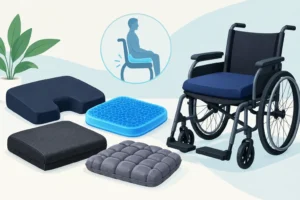
A wheelchair cushion can change far more than how a seat feels after lunch. For someone who sits for several hours each day, the best pressure relief cushions can help protect skin, improve positioning, reduce fatigue, and make everyday activities feel more manageable. The right choice depends on the person, their wheelchair, their transfer ability, and how much time they spend seated.

A cushion is not simply an accessory to add softness. It is part of the seating system. It affects pelvic stability, leg position, reach to the wheels or joystick, and the ability to sit comfortably through meals, work, appointments, and travel. For users with reduced sensation, limited mobility, a history of pressure injuries, or changing posture, a professional seating assessment is especially valuable.

What makes a pressure relief cushion effective?

Pressure injuries often develop when the same area of skin and underlying tissue is exposed to pressure for too long. The bony areas beneath the pelvis, particularly the sitting bones and tailbone, are common concern points. Moisture, friction, sliding forward in the chair, poor posture, and limited ability to shift weight can all increase the risk.

An effective pressure relief cushion does not eliminate the need for regular movement and skin checks. Instead, it spreads load over a larger surface area, reduces concentrated pressure, and supports a more stable sitting position. The best design for one user may be unsuitable for another. A highly contoured cushion may improve pelvic alignment for one person, while someone with fluctuating edema or a high risk of skin breakdown may need a different material and setup.

The cushion also has to work with the wheelchair. Seat width, seat depth, backrest angle, footplate height, armrest position, and the user’s body shape all matter. A cushion that is too high may leave the feet unsupported or change access to the joystick. One that is too narrow can create pressure at the hips, while an oversized cushion may not sit securely on the wheelchair base.

Types of the best pressure relief cushions

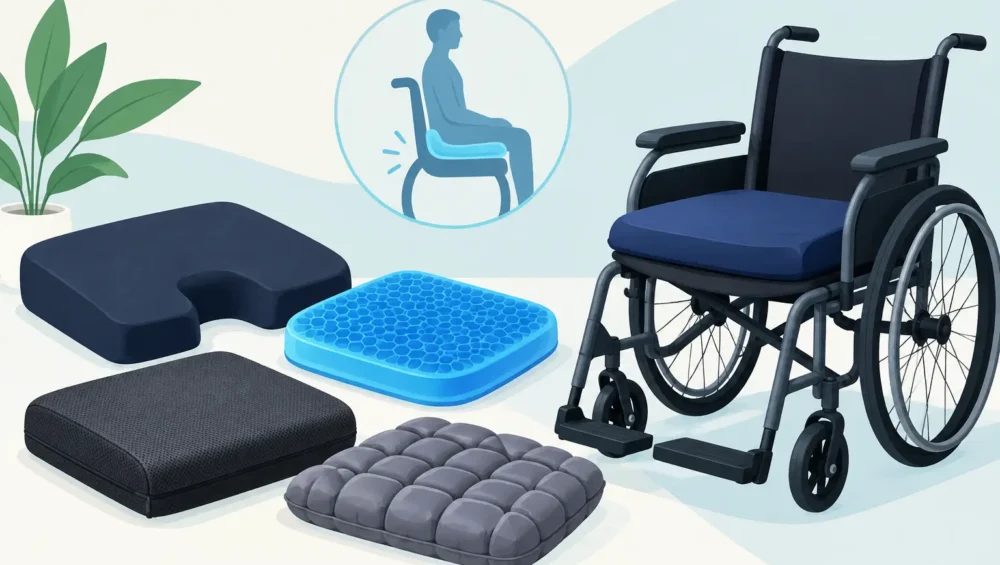
High-density foam cushions

Quality foam cushions are often a practical starting point for users who need better comfort, moderate pressure distribution, and stable support without complicated daily adjustments. They can be lightweight, easy to carry, and well suited to active wheelchair users who transfer frequently or fold their chair for transport.

Not all foam performs the same way. Basic foam can compress quickly and lose its supportive shape. Higher-density, multi-layer, or molded foam usually provides more controlled positioning and longer-lasting performance. Contoured foam can help guide the pelvis into a more neutral position, which may reduce sliding and improve comfort.

Foam is not always enough for a person at high risk of pressure injury, particularly if they sit for long periods without independent weight shifts. Still, for many users, it offers a good balance of stability, simplicity, and everyday practicality.

Gel cushions

Gel cushions use fluid-like gel inserts, often combined with foam, to distribute pressure and contour around the body. They can feel comfortable immediately and may work well for users who want more immersion around the sitting bones without moving to a fully air-based system.

The trade-off is weight. Gel cushions can be heavier than foam, which matters when lifting a folding wheelchair into a car or traveling with a lightweight electric wheelchair. Some gel designs may also hold heat, although breathable covers and well-designed foam layers can help manage this. Look for a construction that keeps the gel properly positioned rather than allowing it to shift away from the areas that need support.

Air-cell cushions

Air-cell cushions use interconnected or individually adjustable air compartments. They are widely used for advanced pressure management because the cells can allow the body to immerse into the cushion, helping distribute pressure across a broader area.

They also require more attention. Inflation must be set correctly for the individual user, and it should be checked routinely. Overinflation can make the surface firm and reduce immersion; underinflation can allow the user to bottom out onto the wheelchair seat. Air cushions can be an excellent option for users with high skin-risk needs, but they are not a fit-and-forget solution. They should be assessed, adjusted, and maintained carefully.

Hybrid cushions

Hybrid cushions combine materials such as foam, gel, air, or a fluid insert. This approach can offer a useful middle ground: the stability of foam with enhanced pressure distribution from gel or air. Some designs also provide a shaped base that assists posture while using a softer top layer for comfort.

For people who need both positioning and pressure care, a hybrid model can be worth considering. The key is identifying the main priority. If the user slides forward, has pelvic asymmetry, or leans to one side, positioning may need just as much attention as pressure distribution.

Choose based on sitting time, skin risk, and daily routine

Start by considering what a typical day actually looks like. A person who uses a wheelchair for short outings may need a very different cushion than someone who remains seated for eight to twelve hours. Long sitting time, limited ability to reposition, fragile skin, recent weight loss, incontinence, diabetes, or a past pressure injury all raise the need for more specialized assessment.

Consider these questions before choosing:

  • Can the user independently shift weight, or do they need caregiver assistance?
  • Has there been redness, skin breakdown, numbness, or pain around the pelvis?
  • Does the user slide forward, lean to one side, or feel unstable when reaching?
  • Will the cushion be used indoors only, or also for car travel, outdoor use, and longer appointments?
  • Can the user or caregiver manage air-pressure checks and regular cushion maintenance?

Comfort matters, but it should not be the only deciding factor. A very soft cushion may initially feel pleasant while offering poor stability. When the pelvis is unstable, the body often compensates by leaning, sliding, or using extra energy to stay upright. That can create discomfort in the back, shoulders, and hips over time.

Fit is as important as the cushion material

A pressure relief cushion should generally match the usable width and depth of the wheelchair seat. It should rest flat and securely, with no curling edges or gaps that could affect balance. The user’s hips should be supported without the cushion pressing tightly against the outer thighs.

Seat height deserves careful attention. Adding a thick cushion can raise the user enough that their feet no longer rest correctly on the footplates. This may increase pressure under the thighs or cause the pelvis to tilt backward. In an electric wheelchair, cushion height can also alter armrest position and joystick access. A small change in height can make daily driving and transfers noticeably harder.

The cover is part of the system too. A breathable, washable cover helps manage heat and moisture. A stretch cover allows the cushion to contour more effectively, while a non-slip base helps keep it from moving. Do not replace a specialized cover with a thick household cover or folded blanket, as this can change pressure distribution and create friction.

Safe habits still matter

Even the best cushion cannot protect skin if the user remains in one position for too long. Regular weight shifts, tilt or recline functions where appropriate, good hydration, and daily skin checks remain essential. A tilt-in-space or reclining electric wheelchair may help some users redistribute pressure, but it should be used according to guidance from a clinician or seating professional.

Check for persistent redness, warmth, discoloration, pain, or broken skin, especially around the tailbone, hips, and sitting bones. For people with reduced sensation, visual checks by a caregiver may be necessary. If redness does not fade after pressure is relieved, seek medical advice promptly.

Cushions also wear out. Foam may flatten, air valves may leak, gel may shift, and covers can lose their protective qualities. Inspect the cushion routinely and replace it when it no longer holds its shape or provides the intended support.

Try the cushion with the wheelchair, not in isolation

A showroom trial can reveal issues that are easy to miss when shopping from specifications alone. Sit in the actual wheelchair, test reaching the joystick or wheels, check foot placement, practice transfers, and spend enough time seated to notice whether the pelvis stays stable. For complex needs, bring the user’s clinician or request guidance from a qualified seating professional.

At Vechair, wheelchair selection is approached as a complete mobility setup, not just a chair purchase. Cushion fit, driving position, body support, and practical daily use should work together, whether the priority is a lightweight folding chair for car travel, a reclining model for longer sitting, or a higher-capacity wheelchair built for dependable support.

The right cushion should help the user feel secure enough to focus on the day ahead: joining family at the table, taking a longer outing, or moving through home with less discomfort and more confidence.

Rear Versus Mid Wheel Drive: Which Fits You?CategoriesUncategorized

Rear Versus Mid Wheel Drive: Which Fits You?

A chair that turns beautifully in a showroom can still feel wrong at home if it catches on tight hallways, struggles over a doorway threshold, or feels uneasy on a sloped driveway. That is why rear versus mid wheel drive is more than a technical specification. The drive-wheel position changes how an electric wheelchair responds to your body, your home, your vehicle, and the places you want to go.

For many people, the decision comes down to daily confidence. A mid-wheel-drive chair is often the natural choice for compact indoor spaces. A rear-wheel-drive chair can feel more composed when traveling farther outdoors or across uneven ground. Neither is automatically better. The right answer depends on where you spend your time, how you transfer, your seating needs, and what makes you feel secure behind the controls.

Rear Versus Mid Wheel Drive at a Glance

The drive wheels are the large powered wheels that move an electric wheelchair. On a rear-wheel-drive model, they sit behind the user. On a mid-wheel-drive model, they are positioned beneath or close to the center of the seat. Small caster wheels support the other end or ends of the chair.

That placement affects the chair’s turning behavior, length, traction, ride feel, and the way it handles changes in surface level. It also affects how much of the chair you need to account for when passing a corner, entering an elevator, or positioning beside a table.

A good comparison should not stop at a turning-radius number. Seat width, overall chair length, suspension, tire type, user weight, battery placement, footrest design, and programmed speed settings all influence the real experience. Test-driving the actual configuration matters, especially when comfort and safety are at stake.

Why Mid-Wheel Drive Works So Well Indoors

A mid-wheel-drive electric wheelchair turns around its own center point more closely than a rear-wheel-drive chair. In practical terms, that can make a noticeable difference in an apartment, a bedroom, a bathroom, or a narrow kitchen. The chair is less likely to swing wide behind you when making a tight turn.

This design is especially helpful for users who need to approach a bed, toilet, dining table, or work desk from precise angles. Caregivers may also find it easier to position the chair for transfers in limited space. For a person who spends most of the day inside, easier maneuvering can mean less dependence on someone else to reposition the chair.

The centered driving feel

With the powered wheels close to your center of mass, a mid-wheel-drive chair often feels direct and responsive. The chair rotates around you rather than around a point behind you. Many first-time power-chair users find this intuitive after a short practice period.

That responsiveness does require careful joystick control. Fast turns in a confined area can be uncomfortable if the chair is set too aggressively, particularly for a user with limited trunk control. A trained specialist can adjust acceleration, deceleration, and turning sensitivity to create a calmer, more controlled ride.

Thresholds and uneven transitions

Mid-wheel-drive chairs can be excellent indoors, but they deserve a real-world test over the obstacles in your routine. Door thresholds, uneven tiles, short ramps, lift entrances, and pavement joints may feel different from a flat showroom floor. Because caster wheels are positioned in front of and behind the drive wheels, the chair can move through a series of small rises and dips with a distinct rocking motion.

This does not make mid-wheel drive unsuitable for outdoor use. Many models are designed for daily community travel. It simply means that curb-climbing ability, suspension, ground clearance, and approved terrain should be checked carefully instead of assumed from the drive-wheel location alone.

When Rear-Wheel Drive Is the Better Match

A rear-wheel-drive chair places the driven wheels behind the seat, often creating a longer wheelbase and a more tracking-oriented feel. When moving in a straight line, especially at higher outdoor speeds, many users appreciate the stable, planted sensation this design can provide.

It is a strong option for people whose day includes longer outdoor routes, wider pathways, car parks, paved parks, and open shopping areas. The chair’s weight distribution and wheel placement can also support a confident ride over mildly uneven surfaces, depending on the specific model and suspension system.

More predictable outdoor travel

Rear-wheel-drive chairs are often favored by users who value directional stability. On a long path, the chair may feel less eager to rotate than a compact mid-wheel-drive model. That can be reassuring for someone who wants to travel steadily from point A to point B rather than make frequent tight turns.

The rear drive wheels can provide useful traction, but terrain still matters. Wet grass, loose gravel, steep grades, deep potholes, and curbs are not automatically safe for any powered wheelchair. Follow the model’s stated limits, reduce speed on uncertain surfaces, and use appropriate routes whenever possible.

The trade-off in tight spaces

The same longer chassis that supports outdoor composure can make rear-wheel-drive chairs less convenient in compact interiors. Turning requires more room, and the rear of the chair may swing outward during a corner. In a narrow hallway or small accessible bathroom, this can become frustrating.

Before choosing a rear-wheel-drive chair, measure the places that matter most: bedroom pathways, bathroom access, kitchen turns, elevator depth, vehicle ramps, and the area beside the bed. Measurements should include not only doorway width but also the turning space available before and after the doorway.

Stability Is About More Than Drive-Wheel Position

It is understandable to ask which design is safer. The honest answer is that safety comes from the complete chair setup and the way it is used. A properly selected mid-wheel or rear-wheel-drive wheelchair can provide secure daily mobility, while the wrong size or configuration can create problems regardless of drive type.

Pay close attention to the chair’s weight capacity, seat dimensions, suspension, anti-tip design, ground clearance, and incline rating. A user who needs powered recline, tilt, elevating leg rests, or a specialized cushion must also consider how those features affect balance and total weight. For larger users, choosing a heavy-duty chair with the right payload rating is a safety decision, not merely a comfort upgrade.

Posture matters as well. If you slide forward in the seat, lack lateral support, or cannot keep your feet properly positioned, even a technically capable chair may not feel stable. Seating assessment should be part of the purchase process, particularly for long-term wheelchair users and people with changing medical needs.

Consider Transport, Storage, and Daily Support

Drive-wheel position is only one piece of ownership. If the chair must travel in a car, check its folded or disassembled dimensions, total weight, and whether your vehicle lift or ramp can handle it. Many full-size rear-wheel and mid-wheel power chairs are designed for everyday driving rather than frequent manual lifting.

Battery range should also match the real distance you travel, with room for detours and battery aging. Ask how the chair is charged, where it can be stored, and what happens if a controller, tire, motor, or charger needs attention. Reliable service and available spare parts protect your independence long after delivery day.

At Vechair, a hands-on test drive with trained guidance can help make these differences clear. Bring your questions, describe your home and usual routes, and if possible, share measurements or photos of the access points you use every day. The best chair is not the one with the longest feature list. It is the one that helps you move through your own life with less hesitation and more freedom.

How to Make the Final Choice

Choose mid-wheel drive when tight indoor maneuvering is your top priority and you need to make frequent close turns around furniture, doors, and transfer areas. Choose rear-wheel drive when you value a steadier feel on longer outdoor routes and have enough space at home to manage a wider turning path.

If your life includes both, do not force the decision based on a single feature. Test each chair at low speed, turn both directions, stop and start, reverse through a doorway, and drive over a small threshold if it is safe to do so. Notice how your body feels after several minutes, not just how the chair looks from across the room.

A mobility chair should support the life you want to keep living – morning routines at home, meals with family, appointments, outings, and the simple ability to decide where you want to go next.

Waranti Motor Kerusi Roda Elektrik ExplainedCategoriesUncategorized

Waranti Motor Kerusi Roda Elektrik Explained

A powered wheelchair can change the shape of an ordinary day: getting from the bedroom to the kitchen, joining family outside, visiting a clinic, or moving through a shopping center with less reliance on others. That is why waranti motor kerusi roda elektrik deserves more attention than a line of small print. The motor is central to movement, confidence, and everyday independence.

A good warranty does not mean an electric wheelchair will never need attention. It means that when a covered manufacturing fault affects a major component, there is a clear path to professional assessment and repair. For buyers choosing a chair for themselves, a parent, or a spouse, that support can be just as meaningful as chair weight, folding design, range, or weight capacity.

What a motor warranty actually covers

The motor converts electrical power from the battery into movement at the wheels. Depending on the wheelchair design, it works alongside the controller, wiring, gearbox, brakes, joystick, and battery system. If the chair does not move correctly, the motor may be involved, but it is not always the cause.

A motor warranty generally protects against manufacturing defects that appear during the stated coverage period under normal use. Examples may include an internal motor fault, an abnormal failure of a motor component, or a defect that prevents the motor from operating as designed. The exact decision follows an inspection by a qualified service team, because symptoms alone do not confirm the source of a problem.

At Vechair, electric wheelchair motors are covered by a two-year warranty. Batteries, chargers, and controllers are covered for one year. This distinction matters because each part has a different role and different wear pattern. A battery is consumable and affected by charging habits, storage temperature, and usage frequency. A motor is built for sustained mechanical work, so its warranty period is longer.

A warranty is not the same as lifetime maintenance. Parts that naturally wear through use, accidental damage, water damage, modifications, and problems caused by misuse may fall outside coverage. Before buying, ask for the warranty terms in clear language and keep your purchase documentation. A reliable seller should be able to explain what is covered, how an inspection works, and where parts and repairs will be handled.

Why the motor matters more than many buyers expect

A lightweight folding chair may look simple, but its performance depends on the entire drive system working together. The motor influences acceleration, hill-climbing ability, braking response, and how confidently the chair handles daily routes. For a user who travels by car, a compact chair may be the right choice. For someone using uneven paths, ramps, or outdoor areas, motor performance and terrain suitability need closer consideration.

The strongest motor is not automatically the best option. A heavy-duty or off-road wheelchair may offer higher capacity and more capable outdoor performance, but it can be heavier to transport and may take up more space at home. An ultra-light carbon or magnesium model can make lifting and vehicle storage easier, although its intended terrain and user-weight limits should still match real life.

Think about the route, not just the showroom floor. Will the chair cross door thresholds? Is there a steep driveway? Does the user need to travel over rough pavement, grass, or tiled walkways? Will a caregiver regularly fold and lift the chair into a car? These practical questions help determine whether a motor system is appropriate before warranty coverage ever needs to be used.

Signs your electric wheelchair needs service

Do not assume a loss of movement means the motor has failed. Sometimes the solution is as simple as releasing a freewheel lever, fully charging the battery, reconnecting a plug, or checking for an active error indication. Still, a change in driving behavior should not be ignored, especially if it affects safety.

Arrange a professional inspection if the chair repeatedly loses power, moves unevenly, makes a new grinding or clicking sound, pulls strongly to one side, hesitates after joystick input, or stops unexpectedly. If there is a burning smell, visible wire damage, heat around the drive area, or unusual vibration, stop using the chair until it has been checked.

A service technician will typically examine more than the motor. They may test battery voltage, charger output, controller signals, connectors, brakes, tires, and mechanical resistance at the wheels. This approach protects the user from unnecessary replacement costs and makes sure the real issue is addressed.

How to protect your warranty and your daily mobility

The best way to care for a motor is to care for the wheelchair as a complete system. Regular, sensible habits reduce avoidable strain and help technicians identify genuine component issues quickly.

Keep the chair dry whenever possible and wipe away dirt, sand, or moisture after outdoor use. Avoid driving through standing water unless the specific model is designed and approved for those conditions. Water can affect electrical connectors and controls even when the motor itself appears fine.

Use the correct charger supplied or approved for the wheelchair, and follow the recommended charging routine. A weak battery can make the chair feel slow or unresponsive, leading users to suspect the motor when the power source is actually the issue. Do not overload the chair or carry passengers, as excess weight places stress on the motors, frame, wheels, and braking system.

It also helps to avoid abrupt impacts with curbs and to keep tires in good condition. Underinflated pneumatic tires increase rolling resistance, which makes the drive system work harder. If the wheelchair is stored for a long period, follow the supplier’s instructions for battery charging and storage rather than leaving it unused with a depleted battery.

Questions to ask before you buy

Warranty value depends on the service behind it. A two-year motor warranty is more useful when the provider can inspect the chair, diagnose the fault, and access replacement parts without leaving the customer to solve the problem alone.

Before choosing a model, ask where repairs are performed, whether spare parts are available locally, how warranty claims are assessed, and what information you should keep after purchase. Ask whether the chair’s motor and drivetrain are suitable for the user’s weight, usual terrain, and expected travel distance. If a chair is intended for frequent outdoor use, discuss that openly rather than selecting only by price or appearance.

A test drive is valuable because it reveals things a specification sheet cannot. Pay attention to joystick response, turning space, seat comfort, braking feel, ease of folding, and how secure the user feels when starting and stopping. For caregivers, test how manageable the chair is to fold, lift, and load.

When warranty support is most valuable

The real benefit of a motor warranty often appears after the excitement of a new purchase has passed. Mobility equipment becomes part of a routine, and any interruption can affect work, appointments, family plans, and a person’s sense of freedom. Clear service support turns a technical fault into a manageable next step.

If your electric wheelchair shows a possible motor-related problem, record what happened, when it started, whether an indicator light appeared, and what conditions were present. Avoid dismantling the drive system yourself. Contact the service provider with the model, purchase details, and a concise description of the issue so the team can guide you safely.

The right electric wheelchair should feel like dependable personal technology, not another worry to manage. Choose a chair built for your actual life, maintain it with care, and select warranty support that helps keep independence moving forward.

Three Versus Four Scooters: Which Fits You?CategoriesUncategorized

Three Versus Four Scooters: Which Fits You?

A mobility scooter should make everyday movement feel less complicated, whether that means reaching the kitchen comfortably, moving through a store, or joining family outside. When comparing three versus four scooters, the best choice is not simply the model with more wheels. It is the one that fits your body, home, usual routes, and the level of confidence you want when you travel independently.

A three-wheel scooter is often easier to steer through tight spaces. A four-wheel scooter usually gives a more planted feel, especially outdoors. Both can be excellent mobility solutions when the design, weight capacity, battery range, and service support match the user’s needs.

Three Versus Four Scooters: The Real Difference

The key design difference is at the front. A three-wheel mobility scooter has one front wheel and two rear wheels. A four-wheel scooter has two wheels at the front and two at the rear. That extra front wheel changes how the scooter turns, how it feels on uneven surfaces, and how much space it needs to move around furniture or corners.

Three-wheel scooters are built around maneuverability. Because there is only one front wheel, they can typically make a tighter turn. This can be especially helpful in apartments, older homes with narrower hallways, elevators, clinics, and shopping aisles. Many users also appreciate the open space in front of the seat, which can make it easier to position the feet comfortably or get closer to a table.

Four-wheel scooters are built around a wider support base. With two front wheels, they generally feel steadier when traveling straight, taking a gradual outdoor turn, or crossing surfaces that are not perfectly smooth. For people who feel anxious about balance, or for family members choosing a scooter for an older parent, that additional stability can be reassuring.

Still, wheel count alone does not determine safety. The scooter’s frame, center of gravity, tire size, suspension, speed setting, turning habits, user weight, and road surface all matter. A properly selected three-wheel scooter can feel secure and dependable. A four-wheel scooter can still be difficult to use if it is too wide for the home or too heavy to transport.

When a Three-Wheel Scooter Makes More Sense

A three-wheel scooter is often the stronger choice for people who spend most of their time indoors or in highly controlled environments. If your daily route includes tight kitchen turns, narrow corridors, compact bathrooms, or small retail spaces, a tighter turning radius can make a noticeable difference.

It can also suit users who want more legroom. The single front wheel leaves room for a flatter foot platform, which can be more comfortable for someone with stiff knees, limited leg flexibility, or a need to stretch their feet forward. Some users find getting on and off easier when there is less structure around the front of the scooter.

A three-wheel design can be a good fit if you are able to sit upright with reasonable trunk control and will mostly travel on flat pavement, indoor flooring, and smooth community walkways. It is also practical for users who want a compact scooter that feels responsive rather than bulky.

There are trade-offs. The narrower front footprint means a three-wheel scooter may feel less settled during sharp turns at speed, on a steep side slope, or when one wheel encounters an uneven edge. This does not mean it is unsafe. It means the rider needs to slow down, turn gradually, and choose routes with care. Mobility equipment should support independence, not encourage risky shortcuts over curbs, deep potholes, loose gravel, or wet grass.

When Four Wheels Offer Better Confidence

Four-wheel scooters are often preferred by people who regularly travel outdoors. Sidewalk joints, driveway slopes, parking areas, uneven pavement, and rougher paths can make a wider stance feel more secure. The two front wheels provide a stable platform that many first-time users appreciate immediately during a test drive.

This design is particularly worth considering for a heavier user, someone who carries shopping bags or medical essentials, or anyone who plans to use the scooter for longer outdoor trips. A four-wheel scooter may also be a better match for users who have reduced balance, slower reaction time, or concerns about making turns safely.

Larger four-wheel models can offer features that improve comfort on longer rides, such as suspension, pneumatic tires, higher-capacity batteries, supportive captain’s seats, armrests, and brighter lighting. These features are helpful for neighborhood outings and longer distances, but they may add weight and size. Before choosing, measure the narrowest doorway, elevator entrance, storage area, and vehicle cargo space you will use.

A four-wheel scooter is not automatically the best option for every outdoor user. If it is too large to turn comfortably at home, it may remain parked more often than it is used. The best scooter is one that can move with you through your actual day, not only one that looks capable on a showroom floor.

Consider Your Daily Route Before the Specifications

Start with where the scooter will be used most often. A person who needs to move independently from bedroom to kitchen, then through a small grocery store, may benefit more from agility than a wide wheelbase. A person who travels across a residential community, visits outdoor markets, or follows uneven walkways may place more value on four-wheel stability.

Think about your usual surfaces. Smooth tile, hardwood, low-pile carpet, and level concrete are relatively easy for either configuration. Outdoor slopes, cracked sidewalks, gravel, grass, and rain-slick pavement demand more caution. Larger tires and suspension can improve ride comfort, but no mobility scooter should be treated like an off-road vehicle unless it was specifically engineered for that purpose.

Also consider transportation. If the scooter must fit into a car trunk, be lifted by a caregiver, or be taken apart for travel, compact dimensions and manageable component weight may matter as much as wheel configuration. A portable three-wheel scooter may be easier to maneuver in a vehicle loading area, while a travel-friendly four-wheel model may provide better stability after arrival. Check the heaviest individual part, not only the total product weight.

Comfort, Capacity, and Control Matter as Much as Wheels

A scooter should fit the person using it. The seat needs to provide enough width and support without making the rider feel confined. The tiller should be easy to reach without leaning forward, and the control panel should be understandable for the user’s hand strength and vision. A comfortable seating position helps reduce fatigue and supports safer steering.

Always check the maximum user weight capacity. Do not choose a scooter at the edge of its limit, especially if the user may carry bags, oxygen equipment, or other daily items. Selecting adequate capacity protects performance, braking, battery efficiency, and long-term reliability.

Battery range needs an honest assessment too. Manufacturer range estimates are usually based on ideal conditions. Hills, heavier loads, cold weather, tire pressure, frequent stops, and battery age can reduce the distance available. Choose a scooter with room for your normal trip and a sensible reserve for the return journey.

For many people, a test drive answers questions that specifications cannot. Can you turn into a hallway without backing up? Is the ride comfortable over a sidewalk seam? Can your hands operate the throttle and brake controls without strain? Do you feel stable when starting, stopping, and turning? These are the details that build confidence.

Safety Habits for Either Scooter Type

Whether you choose three or four wheels, safe use begins with proper habits. Keep both feet on the foot platform, slow down before turning, and avoid taking corners at full speed. Travel straight up and down slopes where possible rather than across them, and never attempt to climb a curb unless the scooter is designed for it and the route is safe.

Keep tires properly maintained, charge the battery according to the manufacturer’s instructions, and have the scooter inspected if steering, braking, or acceleration begins to feel different. Reliable after-sales service and access to genuine replacement parts matter because a mobility scooter is not just a purchase. It is part of your daily independence.

A trained mobility specialist can help compare turning radius, seat comfort, suspension, folding needs, payload capacity, and battery requirements in person. At Vechair, guided test drives and service support help users and caregivers make a decision based on real-life movement, not guesswork.

The right scooter should leave you thinking less about the device and more about where you want to go next.

Outdoor Powerchair Guide for Confident TravelCategoriesUncategorized

Outdoor Powerchair Guide for Confident Travel

A powerchair that feels excellent across a smooth showroom floor may feel very different on a cracked sidewalk, a sloped driveway, or a park path after rain. This outdoor powerchair guide helps you look past a chair’s appearance and focus on the details that protect comfort, confidence, and independence once you leave the house.

For many people, outdoor mobility is not about extreme trails. It is about getting to the mailbox without fatigue, joining family at a restaurant, moving through a shopping area, visiting a park, or traveling from the car to an appointment without relying on someone to push. The right chair should make these everyday journeys feel more possible, while respecting the terrain, distance, and support you truly need.

Outdoor Powerchair Guide: Start With Your Real Routes

Before comparing motors, batteries, or chair weight, picture the routes you use most often. A chair for paved neighborhoods and indoor shopping centers needs a different balance than one for uneven compounds, gravel paths, grass, or frequent slopes.

Think about the ground outside your home. Are sidewalks smooth or broken? Is there a curb at the end of the driveway? Do you need to cross grass to visit family or park near a building entrance? Also consider weather. Wet leaves, loose gravel, puddles, and painted ramps can reduce traction even when a surface looks harmless.

Be honest about the most demanding part of a typical outing, not only the easiest part. If your route includes a steep ramp or uneven pavement, that challenge should guide your decision. A compact folding powerchair may be ideal for errands and car travel, but a heavier off-road model with larger wheels and suspension can be the safer choice for rougher ground.

Match the Chair to Terrain, Not Just the Label

Terms such as off-road, heavy-duty, and all-terrain are useful starting points, but they do not replace a close look at the chair’s setup. Outdoor ability comes from several features working together.

Wheels, tires, and ground clearance

Larger drive wheels generally handle small bumps, uneven paving, and shallow gaps more calmly than very small wheels. Pneumatic tires can offer better cushioning and grip on imperfect surfaces, although they need regular pressure checks and may puncture. Solid tires avoid flats and reduce maintenance, but they can transmit more vibration through the frame on rough roads.

Ground clearance matters when crossing thresholds, ramp edges, and uneven surfaces. A chair that sits low to the ground may be wonderfully compact indoors yet more likely to catch on a raised edge outside. Do not attempt curbs or obstacles beyond the manufacturer’s stated capability. Even a powerful chair can tip or damage its frame when used beyond its design limits.

Suspension and stability

Suspension is not only a comfort feature. It helps the wheels maintain better contact over minor unevenness and reduces the jolt that reaches the user’s back, hips, and arms. For someone with pain, limited trunk control, or a history of pressure discomfort, that difference can determine whether an outing remains enjoyable.

A wider stance and longer wheelbase can improve stability, especially on uneven ground. The trade-off is a larger turning circle and less convenience in narrow hallways, elevators, or compact vehicles. There is rarely one perfect specification. The best choice depends on whether your day is mostly indoors, mostly outdoors, or truly split between both.

Choose Range for Real Life, Not Ideal Conditions

Battery range is often quoted under controlled conditions: level ground, a moderate user weight, favorable temperature, and steady speed. Outdoor range can be lower when you climb hills, travel over rough surfaces, carry bags, use heavier seating functions, or face hot or cold weather.

Build a practical buffer into your decision. If an appointment, shopping trip, and return journey require a certain distance, choose a chair with enough capacity that you are not arriving home with the battery nearly empty. This is especially helpful for users who may not have an easy backup way to return.

Ask how long charging takes and whether the battery can be removed for charging indoors. Removable batteries can be convenient for some households and car users. Integrated batteries may simplify the chair’s design but require access to a suitable charging point where the chair is parked. Keep charging habits consistent, use the correct charger, and follow the battery care instructions supplied with the chair.

Seating Comfort Is Outdoor Safety, Too

A chair can have excellent outdoor hardware and still be the wrong fit if its seating causes discomfort after 20 minutes. Poor posture can make every bump feel larger, reduce control of the joystick, and leave the user tired before the trip is finished.

Look at seat width, depth, back support, cushion type, armrest height, footplate position, and head support where needed. A reclining or tilt-style seating function may help some users manage pressure, fatigue, or positioning during longer days. It also adds weight, complexity, and battery demand, so it is best chosen for a clear daily need rather than as an extra feature alone.

Weight capacity deserves the same attention. The stated capacity must cover the user and any regular items carried on the chair, such as a bag, oxygen equipment, or personal belongings. For larger users, a bariatric model with the correct frame width and support can offer a more secure, comfortable ride than trying to make a lightweight chair do a job it was not built for.

Consider How the Powerchair Travels With You

A powerful outdoor chair is only useful if it can get where you need to go. For car users, check the chair’s folded size, total weight, battery handling, and whether one person can safely lift it. Ultra-lightweight carbon or magnesium designs can make transport easier, particularly for families who regularly load the chair into a trunk.

However, the lightest chair is not automatically the strongest outdoor choice. A portable folding model may be the right answer for smooth sidewalks, travel, and everyday errands. If your regular route includes loose ground, steep slopes, or uneven surfaces, a heavier-duty chair may provide better control and comfort, even if it requires a vehicle lift or more planning.

Measure your home as carefully as your outdoor route. Check doorways, turning areas, ramps, elevator dimensions, storage space, and the vehicle opening. A few measurements taken before purchase can prevent a frustrating surprise after delivery.

Practice Outdoor Skills Before the First Long Trip

Outdoor confidence grows through safe practice. Start in a quiet, level area with a caregiver, family member, or trained advisor nearby. Learn the turning radius, stopping distance, joystick sensitivity, and how the chair responds on a gentle slope.

Approach ramps straight rather than at an angle when possible. Reduce speed before turns, descents, crowded walkways, and wet surfaces. Keep bags secured and avoid hanging heavy items from the back of the chair, as this can affect balance. If you use a seat belt or positioning support, wear it correctly every time.

Four habits are especially worth keeping:

  • Check the battery level before leaving, rather than after you are already on the route.
  • Inspect tires, footplates, armrests, and visible fasteners regularly.
  • Keep the chair clean and dry after wet or dusty outings.
  • Stop using the chair and arrange an inspection if steering, braking, charging, or unusual noises change.

These checks are simple, but they help prevent a small issue from becoming a missed appointment or an unsafe journey.

Service and Spare Parts Matter After Purchase

Outdoor use places more demand on tires, batteries, brakes, controllers, and moving parts than occasional indoor use. That makes after-sales service part of the product, not an afterthought. Ask where repairs are handled, whether common spare parts are available, what the warranty covers, and how quickly you can get help if the chair develops a fault.

Clear warranty coverage gives families added reassurance. It is also worth asking how routine maintenance is scheduled and whether a technician can assess concerns before they become larger repairs. A powerchair is a daily mobility partner. Reliable support helps protect the independence it provides.

The most suitable outdoor powerchair is not necessarily the fastest, lightest, or most feature-filled model. It is the one that fits your body, your routes, your transport plan, and the way you want to live. Take a proper test drive on surfaces that reflect your real life, ask direct questions, and give yourself permission to choose confidence over compromise.

Carbon Versus Magnesium Wheelchairs ComparedCategoriesUncategorized

Carbon Versus Magnesium Wheelchairs Compared

A wheelchair that is only a few pounds lighter can change the whole routine. It can mean less strain lifting it into a car, more confidence folding it after an appointment, and more energy left for the day itself. When comparing carbon versus magnesium wheelchairs, the best choice is not simply the lightest material. It is the chair that fits the user, caregiver, vehicle, daily route, and support needs.

For many people, both materials represent a move away from the heavy, institutional-looking wheelchair of the past. Carbon and magnesium electric wheelchairs can be compact, modern, and genuinely practical for everyday independence. But their strengths are different, and the specifications behind the material name matter just as much as the material itself.

Carbon Versus Magnesium Wheelchairs: The Core Difference

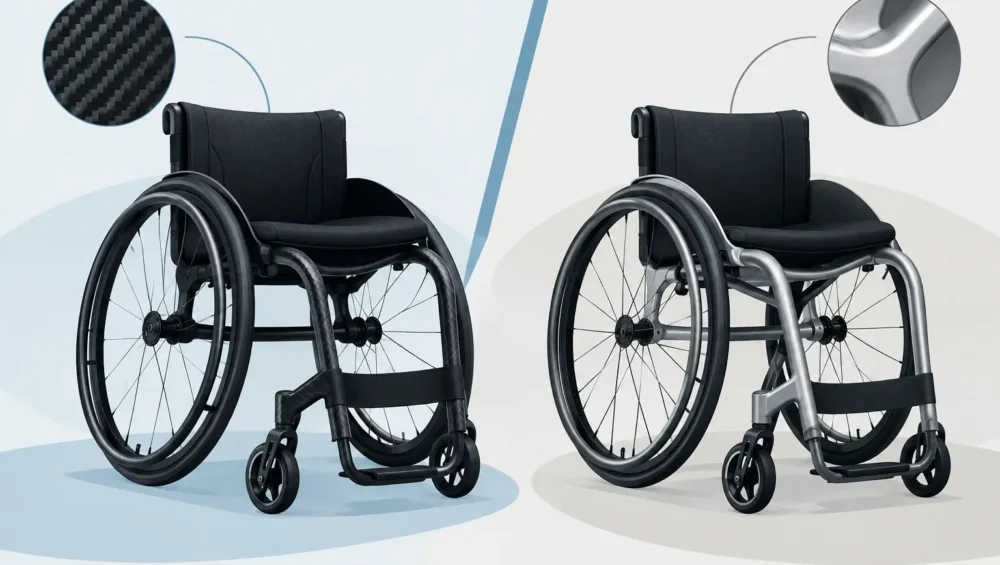
Carbon fiber is a composite material. It is valued for its exceptional strength-to-weight potential, which is why it is widely associated with premium performance equipment. In a wheelchair frame, carbon can help reduce carrying weight while maintaining a rigid structure. This is especially appealing for frequent travelers, car users, and anyone who regularly handles the chair when it is folded.

Magnesium is a lightweight metal alloy. It can also produce a very light wheelchair frame, often with a solid, engineered feel that many users appreciate. Because it is metal, magnesium can suit designs that need shaped components, practical folding mechanisms, and a balance of low weight with everyday durability.

Neither label automatically tells you which chair is better. Two carbon wheelchairs can have very different total weights, folding sizes, battery setups, and weight capacities. The same is true of magnesium models. A comparison should begin with the complete chair, not the frame material alone.

Weight Is More Than a Number on the Specification Sheet

The biggest reason buyers consider carbon or magnesium is transport. A lighter chair is easier to lift, but the relevant figure is usually the heaviest piece you will actually carry. Ask whether the published weight includes the battery, cushion, footrests, and other removable parts. If the battery can be removed before lifting, the practical load may be much lower than the total chair weight.

Carbon models often lead when every pound matters. For an independent user who needs to place a folded chair in a sedan, or for a spouse who must lift it repeatedly, this can be a meaningful advantage. The difference may reduce fatigue and make spontaneous outings feel possible again.

Magnesium chairs can still be highly travel-friendly. Depending on the design, a magnesium frame may deliver an excellent compromise between a manageable lifting weight and the features some users need, such as a roomier seat, a stronger folding structure, or a more substantial battery. If the chair is usually carried by two people or loaded using a ramp or vehicle lift, a small weight difference may not be the deciding factor.

Do not choose based on frame weight alone. Measure the folded dimensions, check your vehicle opening, and consider where the chair will be stored at home. A very light chair that does not fit comfortably in your car or hallway is not the convenient option.

Comfort and Ride Depend on the Whole Design

Material influences how a frame feels, but comfort comes from the complete system: seat width, back support, cushion, joystick position, footrest adjustment, wheel size, suspension, and tires. A well-fitted magnesium chair can feel more comfortable than a carbon chair that is too narrow, too shallow, or poorly configured for the user’s posture.

Carbon fiber frames are known for stiffness, which can create a responsive, direct feel. This may appeal to active users who value precise steering and a light, agile chair indoors. Yet stiffness alone does not guarantee a smooth ride on uneven sidewalks, tile transitions, or parking areas.

Magnesium has a reputation for helping manage vibration, but that benefit varies greatly by model and construction. Tires, suspension, and wheel geometry usually have a larger effect on rough-ground comfort. If outdoor use is part of the plan, test the chair over the surfaces you actually encounter. A showroom test should include turns, narrow pathways, ramps, and a realistic threshold if possible.

For users who spend many hours seated, posture and pressure management deserve more attention than material prestige. A chair should support safe positioning without creating unnecessary pressure on the hips, thighs, or lower back. If there are complex medical or postural needs, seek advice from an appropriate clinical professional alongside a mobility specialist.

Durability, Care, and Real-World Use

Carbon fiber does not rust, an attractive quality in humid climates and for users who may encounter rain during daily travel. However, carbon is not indestructible. A hard impact can damage a composite structure in a way that is not always as obvious as a bent metal tube. Inspect the frame after a significant drop or collision, and follow the manufacturer’s guidance for assessment and repair.

Magnesium requires quality surface protection because bare magnesium is more vulnerable to corrosion than many other frame materials. A properly finished magnesium wheelchair intended for daily use can be dependable, but it still benefits from sensible care. Wipe down moisture, avoid prolonged exposure to wet conditions, and have damaged paint or coating checked promptly.

The practical question is not whether carbon or magnesium can survive daily life. Both can, when the chair is well designed and used within its stated limits. Instead, ask what service looks like if something goes wrong. Are replacement parts available? Can a local technician inspect the folding mechanism, electronics, tires, wheels, and controller? Is there clear warranty coverage for the motors, battery, charger, and controller?

This is particularly important for electric wheelchairs. The frame is only one part of the ownership experience. Battery health, motor performance, controller reliability, and access to qualified repairs have a direct effect on whether the chair keeps supporting your independence.

When Carbon Is Often the Better Fit

A carbon wheelchair may be the right direction when transport is the priority. It suits users or caregivers who lift the chair often, frequent travelers who need a compact mobility solution, and people who value a premium lightweight feel. It can also be a strong choice for someone whose daily environment is mostly smooth and predictable, such as homes, malls, medical centers, and paved walkways.

That does not mean carbon is only for indoor use. The right model can handle normal outdoor errands, provided its tires, ground clearance, battery range, and rated terrain are appropriate. Still, an ultra-light chair should not be expected to perform like a heavy-duty off-road model. If your route includes steep slopes, loose surfaces, broken pavement, or long distances, prioritize the chair’s capability over its material.

When Magnesium May Make More Sense

A magnesium wheelchair can be an excellent choice for someone who wants a light chair but prefers a more balanced everyday build. It may suit users who want a practical folding electric wheelchair with enough structure for regular errands, family outings, and indoor-to-outdoor use.

It can also make sense when value is a major part of the decision. The best mobility investment is not always the model with the most premium material. A well-specified magnesium chair with the right seat size, reliable battery, suitable weight capacity, and local repair support can provide more daily confidence than a carbon model that stretches the budget or compromises on fit.

For larger users, always start with the rated payload and seating dimensions. Never assume a material determines capacity. Frame design, motors, wheels, and overall construction determine whether a chair safely supports the user and essential belongings.

Questions to Ask Before You Decide

Before selecting either material, think through a normal week rather than an ideal day. Who will lift the wheelchair? How often will it be folded? What vehicle will carry it? Will it be used mainly around the house, through shopping centers, or across uneven outdoor areas? How far does the user need to travel between charges?

Then confirm the details that protect the purchase: total weight and removable battery weight, folded size, maximum user weight, range under realistic conditions, slope guidance, warranty terms, and spare-parts access. A hands-on test drive is especially valuable for first-time buyers. It shows whether the joystick feels natural, whether the turning circle works at home, and whether the seat gives the user confidence.

At Vechair, comparing lightweight options in person can help turn technical specifications into a decision that feels clear and safe. The right chair should not merely be easier to carry. It should make it easier to say yes to the next outing, appointment, or ordinary moment of independence.

Can Wheelchairs Handle Steep Slopes Safely?CategoriesUncategorized

Can Wheelchairs Handle Steep Slopes Safely?

A ramp that looks manageable on foot can feel very different from a wheelchair. The answer to can wheelchairs handle steep slopes is yes, sometimes – but only when the chair, the user, and the surface are suited to the grade. Treating every incline the same can lead to wheel spin, loss of control, tipping risk, or a chair that simply stops halfway up.

For daily confidence, the goal is not to find the strongest-looking wheelchair. It is to choose a mobility solution with enough real-world capability for the routes you actually use: your porch, parking area, condo entrance, neighborhood paths, shopping centers, and family homes.

Can Wheelchairs Handle Steep Slopes? It Depends on the Setup

A wheelchair’s ability to climb a slope is determined by more than motor power. Electric wheelchairs have a stated maximum climbing angle or grade, but that figure is usually measured under controlled conditions. It may assume a dry, firm surface, a fully charged battery, a user within the specified weight capacity, and a straight path with no sharp turns.

A manual wheelchair has different limits. A strong, experienced user may manage a moderate ramp independently, while another user may need a caregiver’s assistance on the very same slope. Going uphill demands upper-body strength and traction. Going downhill demands braking control. Neither direction should be treated casually.

The surface changes the answer as well. Dry textured concrete offers much better grip than wet tiles, loose gravel, mossy walkways, painted metal ramps, or sand. A slope that is comfortable on a clear day may be unsafe after rain.

Grade, angle, and what “steep” really means

Slopes may be described as a ratio, a percentage, or an angle. A 1:12 ramp rises one inch for every 12 inches of horizontal distance, which is roughly an 8.3% grade. This is commonly used as an accessibility benchmark, but it is not a promise that every wheelchair user can travel it safely in every condition.

Steeper grades require more force, more traction, and greater control. Short ramps can also be deceptively difficult because their transition at the top or bottom may be abrupt. A chair can scrape its underside, lose drive-wheel contact, or become unstable when it meets that change in angle.

Do not assume that a maximum angle printed in a product specification makes every slope below that number suitable. Manufacturer ratings are limits, not everyday targets. Leave a safety margin, especially when the route is wet, uneven, busy, or used without a companion.

What Determines Whether a Wheelchair Can Climb

For electric wheelchairs, drive-wheel position, motor torque, tire type, battery condition, and total load work together. A compact folding chair may be excellent for indoor use, travel, and smooth paved routes, yet not be the right choice for a long, steep driveway. A larger off-road or heavy-duty model can provide more traction, stability, and capacity, although it may be heavier to transport and less convenient in tight spaces.

Total load means more than the user’s body weight. Consider a backpack, groceries, oxygen equipment, cushions, and any accessories. When a chair approaches its maximum capacity, climbing performance and stopping distance can change. Choose a model with appropriate room above your expected daily load rather than selecting only by the minimum stated capacity.

Battery charge matters more on hills. Climbing draws more power than level driving, and a low battery can reduce performance at the moment you need it. Begin unfamiliar routes with a well-charged battery, particularly if the return journey includes another incline.

For manual wheelchairs, wheel size, handrim grip, tire pressure, brake condition, and anti-tip devices all matter. Rear anti-tippers can add reassurance on climbs, but they may catch on abrupt transitions. A qualified mobility specialist can help determine whether an accessory suits the chair and the environment.

Safe Technique for Uphill and Downhill Travel

Before using a slope alone, inspect it. Look for wet patches, loose stones, cracks, side slopes, drainage grates, pedestrians, and an available level area at the top and bottom. If there is any doubt, use another route or ask for help. Independence includes knowing when a route does not offer a safe margin.

When traveling uphill in a power wheelchair, approach straight on, keep both hands positioned for control, and maintain a slow, steady speed. Avoid turning across the slope. A sideways angle increases the chance of instability, particularly on uneven pavement. Do not stop and start repeatedly unless necessary, since restarting on a steep grade can demand more traction.

When going downhill, reduce speed before the descent rather than halfway down it. Stay straight, keep your body positioned as recommended by the chair manufacturer, and avoid sudden steering inputs. Do not coast a manual wheelchair down a ramp. Maintain controlled contact with the handrims and use gloves if appropriate to protect your hands from friction.

Caregivers should not assume pushing harder is the answer. A caregiver can lose footing behind a chair on a steep decline, which puts both people at risk. Use a route with an appropriate grade, take time to position the chair straight, and seek a second helper or alternative access when required.

Signs a Slope Is Too Steep

Stop and reassess if the drive wheels spin, the front casters lift unexpectedly, the chair slows dramatically, or you feel pulled sideways. Other warning signs include scraping at the transition, needing full speed to continue climbing, or feeling unable to slow down smoothly on descent.

Never try to solve these warnings by leaning far forward, hanging bags from the handles, disabling safety features, or forcing a turn across the incline. Those workarounds can shift the center of gravity in exactly the wrong direction.

For an electric wheelchair, pause only if you can do so on a safe, stable section. Move away from the slope if possible, check the battery and tires, and choose another route. If the chair has lost traction, repeated acceleration can worsen the situation and drain the battery.

Choosing a Chair for Hilly Routes

Start with your real routes, not only the chair’s appearance or folded weight. Measure or photograph the driveway, ramp, and local paths you expect to use. Note the surface, length, turns, and any doorway thresholds. Then compare those conditions with each model’s manual, weight capacity, wheel configuration, and rated climbing specification.

If hills are a regular part of life, prioritize stable geometry, suitable tire grip, a capable drive system, reliable braking, and enough battery range for the complete trip. If car transport is also essential, there may be a trade-off between a highly portable lightweight chair and a larger terrain-focused model. The right answer may be a compact chair for routine travel and a more capable model for demanding outdoor use.

A hands-on test drive is especially valuable for first-time buyers and families choosing for a parent or spouse. At Vechair, trained staff can help compare folding, reclining, heavy-duty, and off-road options while considering body size, daily terrain, transport needs, and confidence behind the controls. A chair should feel like modern mobility technology that supports your routine, not equipment you have to struggle against.

Check the Route Before You Rely on It

Property managers, retail centers, and public facilities may have ramps that meet a general design requirement but are still difficult because of poor maintenance, weather exposure, narrow landings, or heavy doors at the top. Report damaged surfaces, missing handrails, slippery finishes, and blocked ramps. A usable route must be more than technically present.

At home, small changes can make a major difference. Improving drainage, adding a non-slip surface, widening a turning area, or replacing a steep temporary ramp with a properly designed one can make daily travel more comfortable and safer. For permanent changes, consult an accessibility professional or qualified contractor rather than relying on a quick fix.

A steep slope should never decide where you can go without a careful look at the chair, the conditions, and the support available. Test the route gradually, keep a sensible safety margin, and choose equipment that gives you confidence for the journeys that matter most.